Jewelry: Diamonds fall in price, but craft precision holds value
The DIAMINDX diamond price index hit its lowest level on record in August 2026, while De Beers cut average rough prices by nearly a third. Meanwhile, jewelry craftsmen work to a tolerance of hundredths of a millimeter.
 Naomi FeldmanCulture, food and lifestyle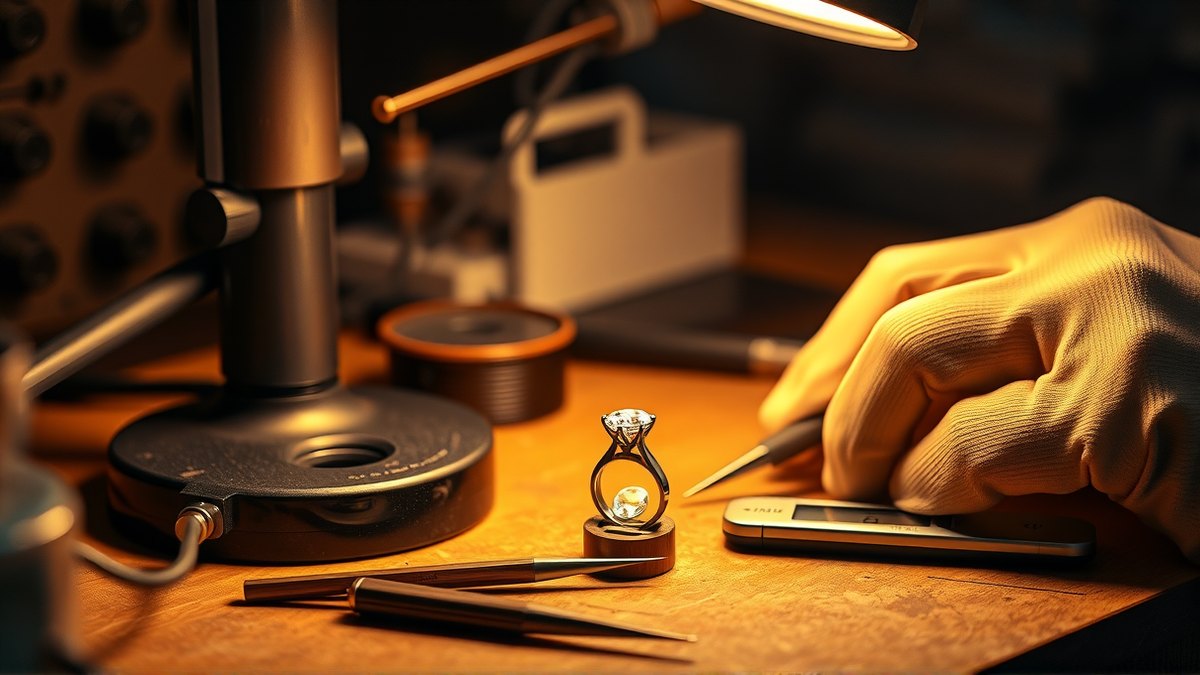
The accessories market is splitting into two tracks: raw material and craft. Jiemian reports that the DIAMINDX index dropped to 2,490 dollars on 10 August 2026, the lowest reading since measurement began. It lost 8 percent in ten days and about half its value since the 2022 peak. In Shenzhen Shuibei, the wholesale jewelry district, prices fell by 40-60 percent. De Beers sold 12.4 million carats of rough in the first half of 2026, a 13 percent increase year-on-year, but at an average price of 105 dollars per carat, down 32 percent. Revenue fell 23.5 percent to 1.3 billion dollars, while inventories exceeded 2 billion dollars.
Customers shift to gold and brands
This does not signal the end of the market, but a reshuffle. Chinese demand for gold jewelry fell by about 30 percent in the first half of 2026, according to World Gold Council data. At the same time, LVMH's watches and jewelry segment grew organically by 9 percent. LVMH itself is facing a weaker period. Revenue in the first half of 2026 reached 38.6 billion euros, down 3 percent on a reported basis despite 2 percent organic growth. Operating profit in the fashion and leather goods division rose organically by 1 percent in the second quarter, the first quarterly increase in two years. The division's value declined from 42.17 billion euros in 2023 to 37.77 billion in 2025.
Tolerance of a hundredth of a millimeter
On the other side of the market, manual skill matters. In the goldsmithing competition at the 48th WorldSkills in Shanghai, participants have three days and 18 hours to complete a piece. The permitted tolerance is 1 percent, or one hundredth of a millimeter; exceeding this threshold results in lost points. One participant was Qiu Shubin, from a technical school in Shenzhen that trains staff for the jewelry group Chow Tai Fook. This shows where value is moving. As raw materials get cheaper, margins shift toward execution precision and brand, which are harder to replicate than a stone.
Accessories as a margin driver
For the fashion industry, the implications are practical. In the clothing segment, where prices rise more slowly than costs, accessories such as handbags, belts, eyewear, and jewelry remain the highest-margin categories. Their performance depends on two variables: raw material prices, which currently favor buyers, and execution skill, which cannot be generated by a model.
Sources
3All figures and quotations in this text come from the sources listed below.
Content prepared by the editorial team with AI assistance.
Naomi Feldman
Comments
0- No comments yet — be the first.