Generative AI in design studios: ideas come easy, products don't
Generative models shorten the path from idea to visualisation, but Chinese vocational instructors and industrial designers agree: an image is not a product. The debate over design authorship is moving from courts to studios.
 Helen MarshCulture, food and lifestyle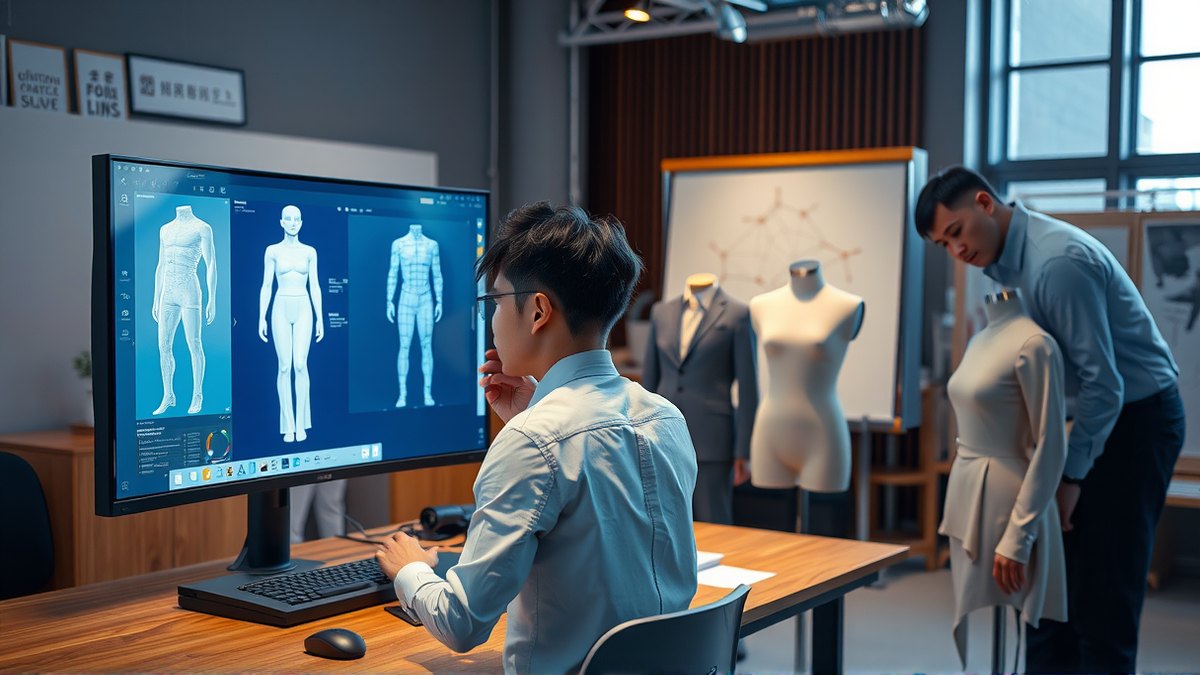
Clothing design is no longer just drawing. In studios, image generators prepare colour variants, suggest cuts, and create visualisations that required a photo shoot just a few years ago. The question of how much of the designer remains in this process resurfaced at the 48th WorldSkills in Shanghai. Chinese woodworking experts stated plainly that AI can generate good ideas and replace some designers, but the problem begins at implementation. Structures with multiple bends, bevels, and sloped planes still require a human hand and eye. Garment cutting works the same way. A model may generate a silhouette, but fitting it to fabric, seams, and the body remains craftwork.
A tool, not a decision
In an interview published by Red Dot, one of the most recognised design competition organisers, Haier’s design heads describe AI as another tool in the decision chain, not an author. William Wu, vice president for design, and Federico Ferretti, who leads the Haier Europe design centre in Milan, make this distinction clear. Red Dot competitions run in three separate categories: product design, brands and visual communication, and design concept. Each judges the result of human work, not prompt skill.
The EU adds duties for designers
EU legislation creates a new context for studios. Directive (EU) 2024/825 on empowering consumers for the green transition entered into force at the start of 2024. Member states had until 27 March 2026 to transpose it, and full enforcement begins on 27 September 2026. In practice, this bans hidden design tricks that shorten a product’s life, such as glued housings and batteries that cannot be replaced. The scale of the problem is quantified: premature disposal of goods accounts for 261 million tonnes of CO2 emissions annually in the Union, generating 35 million tonnes of waste. For a clothing designer, this is a new brief: instead of designing for one season, design for the next decade.
Who answers for a mistake
Generative tools raise questions of liability. If a generator reproduces an element of someone else’s cut, the company is liable exactly as if a person had done it. The company puts the product on the market, not the model. Design therefore defends itself not with image rights but with a documented process: notes, variants, rejected samples, and decisions that can be pointed to. These determine whether a design is original, not how many seconds an image ran on a server.
Sources
3- 01应县木塔与佛光寺模型亮相世赛现场 (第一财经/Yicai)ZH
- 02Interview with William Wu and Federico Ferretti (Red Dot)EN
- 03New EU directive: designing for longevity (iF Design)EN
All figures and quotations in this text come from the sources listed below.
Content prepared by the editorial team with AI assistance.
Helen Marsh
Comments
0- No comments yet — be the first.