Bangladesh and Vietnam count exports as China targets 60 trillion in consumption
Bangladesh's exports grew more than 13 percent in August, but the country has closed 402 garment factories in three years. Vietnam is aiming for 48 billion dollars in textile exports in 2026, while China is betting on domestic consumption.
 Naomi FeldmanCulture, food and lifestyle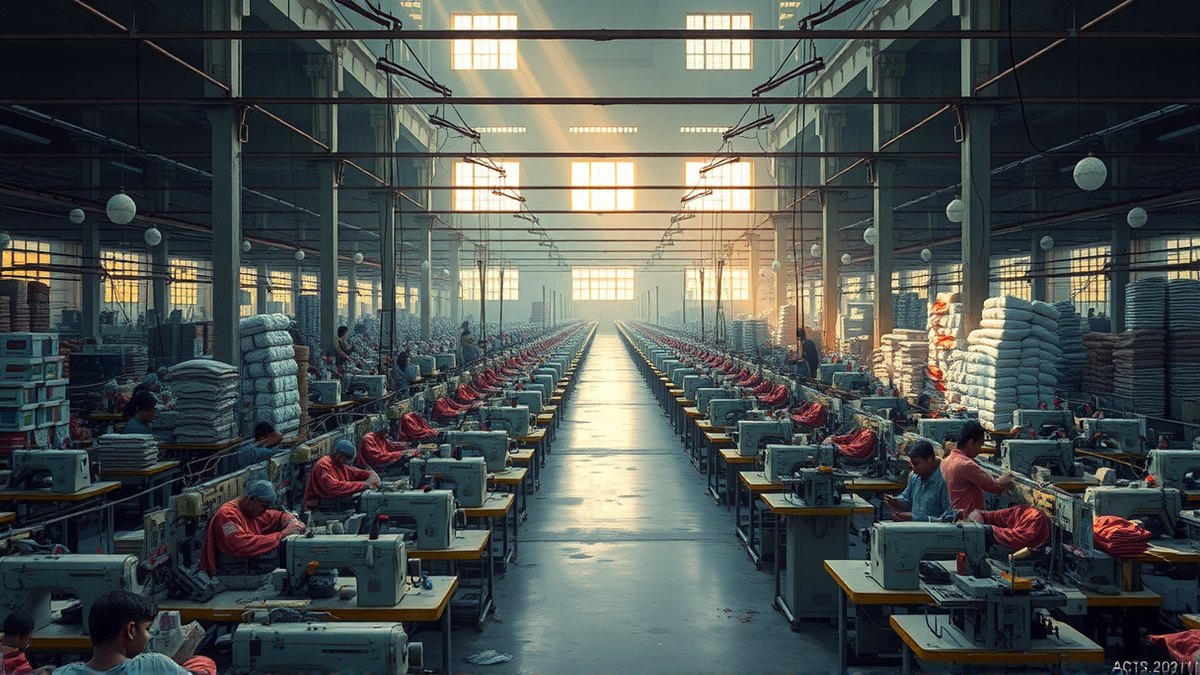
The apparel supply chain is being redrawn this year. According to Export Promotion Bureau (EPB) data cited by The Daily Star, Bangladeshi exports rose 13.14 percent year on year in August, to 4.43 billion dollars. In the first two months of fiscal year 2026-27, they grew 5.43 percent, to 9.16 billion dollars, against 8.69 billion a year earlier. Ready-made garments remain the engine: foreign sales in that sector grew 13.92 percent, to 3.89 billion dollars. The EPB points to stronger demand in main markets, greater buyer confidence in Bangladesh as a sourcing destination and expanded production capacity.
The second face of growth
Parliamentary data fills in the picture. Trade Minister Khandakar Abdul Muktadir said on 3 September 2026 that between July 2023 and June 2026 at least 402 ready-made garment factories closed, 282 affiliated with BGMEA and 120 with BKMEA. He cited an association report of 22 June and pointed to a mix of causes: the pandemic, and global and domestic pressure. Rising export value and a falling number of plants mean one thing: consolidation. Fewer factories are handling larger orders.
Vietnam: 48 billion and a gap in fabrics
Vietnam is aiming for 48 billion dollars in textile and garment exports in 2026. The pace is uneven. The first two months brought 5.7 billion dollars, up 1.2 percent, the first quarter 8.8 billion, January to May 15.1 billion, the half-year 18.8 billion, up 0.9 percent, and January to August already 26.8 billion. In 2025 the industry reached about 46 billion dollars. Fabric imports remain the weak spot: the country covers only part of its demand from its own production, and the fabric gap is estimated at around 64 percent.
China shifts toward the consumer
The largest producer is changing its emphasis. Beijing's "Opinion on supporting the expansion and upgrading of consumption of goods", prepared by the Ministry of Commerce together with several other departments, sets out 20 specific measures. By 2030 the retail value of consumer goods is to reach around 60 trillion yuan. The document names clothing and textiles directly as one of the categories worth trillions of yuan that needs further development. For buyers in Europe it signals growing competition: less volume export, more brands aiming at the Chinese domestic market.
Sources
3- 01Exports grew 13% in Aug on RMG rebound (The Daily Star)EN
- 02402 garment factories closed in Bangladesh in 3 years: Commerce minister (The Daily Star)EN
- 03Vietnam textile & garment exports — feed Google News (nagłówki: cel 48 mld USD, 26,8 mld USD I-VIII 2026, luka w tkaninach 64%)EN
All figures and quotations in this text come from the sources listed below.
Content prepared by the editorial team with AI assistance.
Naomi Feldman
Comments
0- No comments yet — be the first.