T-glass, the bottleneck: one Japanese firm controls 90% of a key AI chip material
Nittobo supplies roughly 90% of the world's T-glass, the specialist glass-fiber cloth inside every advanced AI chip package, and demand has outrun supply. Prices are up 20 to 30% and new capacity will not reach the market until mid-2027.
 Rachel NwosuAI, models and technology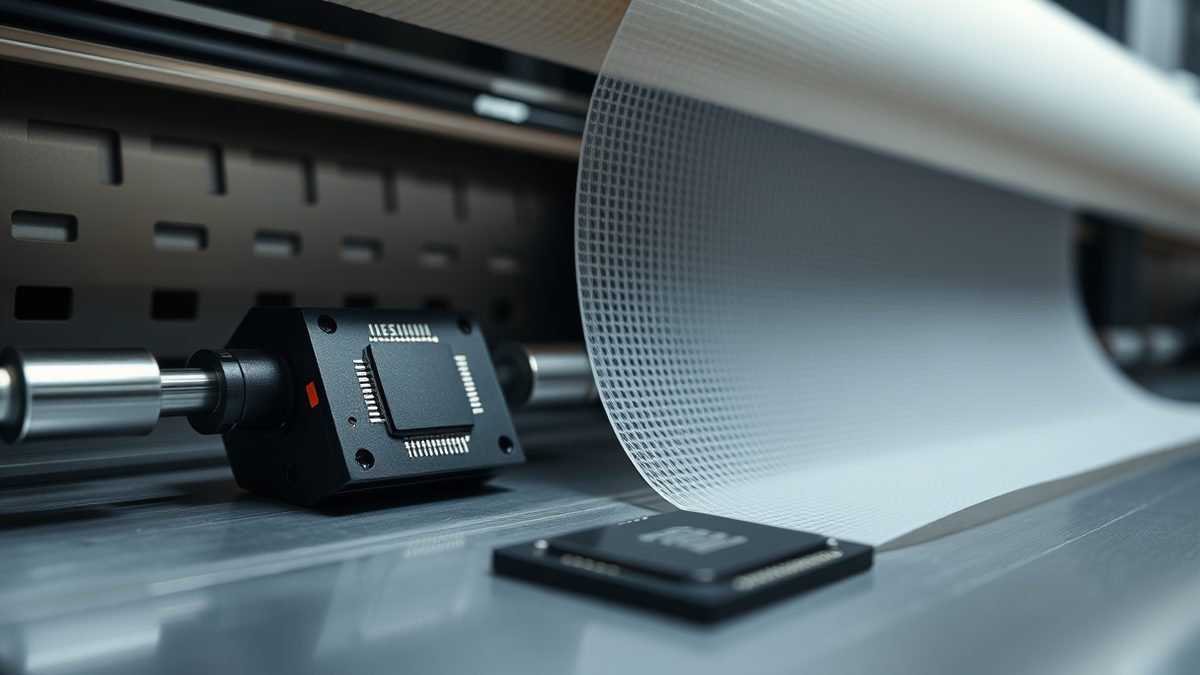
T-glass is not a chip. It is a low-CTE (coefficient of thermal expansion) glass cloth woven into the organic core of IC substrates, the interconnect layer between a chip and its printed circuit board. Tom's Hardware reported on 9 March that the material keeps large, high-heat packages dimensionally stable as AI processors grow bigger and run hotter.
One company makes almost all of it.
According to Tom's Hardware, Nittobo of Japan controls roughly 90% of global T-glass supply. No manufacturer can spin up a new production line quickly. The process requires specialised electric melting furnaces running between 1,600 and 1,700°C. Workers then spin the melted silica-rich glass into yarn and weave it into an ultrathin cloth. Scaling this takes years of investment and expertise.
The alternative, E-glass, is cheaper but mainly used in lower-end chips such as microcontrollers and older mobile processors. For massive 2.5D and 3D packaging, and therefore for AI accelerators, T-glass is the preferred option, per the same report.
What the shortage looks like in numbers
Nittobo is tripling capacity at its Fukushima plant, but the new supply will not arrive on the market until mid-2027. In the meantime, Tom's Hardware reports prices have risen between 20 and 30%. Lead times for downstream materials such as copper-clad laminates have stretched from a normal 8 to 10 weeks to beyond 20.
With T-glass supply even more constrained now, suppliers are no longer providing lead times, said Bill Ho, analyst at Yuanta.
Demand is the driver. Hyperscalers keep ordering larger chip packages that consume more T-glass per unit. Nvidia data cited by Tom's Hardware shows interposer sizes growing from 814mm² for the Hopper architecture to 1,700mm² for Blackwell, a 109% increase. The forthcoming Rubin and Feynman generations will scale further.
Bank of America estimates Nittobo's electronic materials segment will nearly double sales from ¥40.9 billion ($266 million) in 2025 to ¥87.7 billion by March 2028, with operating margins approaching 48%.
Why replacement is hard, and who is scrambling
Bilal Hachemi, an analyst at Yole Group who tracks the IC substrate supply chain, told Tom's Hardware Premium that T-glass has specific dielectric and CTE values that work better for AI chips, especially the organic core. He also pointed to thin industry margins: even modest demand surges can trigger shortages.
Hachemi said Nvidia reaching directly to an upstream material supplier like Nittobo was unprecedented, the first time he had seen it in that part of the supply chain. The worry is that once Nvidia locks down its share, rival chip buyers fight over the remainder.
Nittobo is not standing still. It is doubling raw yarn capacity at its Taiwan plant and importing yarn back to Japan for cloth manufacturing. It has also struck a collaboration deal with Nanya Plastics to outsource some weaving, according to Tom's Hardware. By 2027, roughly 20% of Nittobo's glass cloth is expected to be woven by Nanya.
That Nittobo is partnering with one of its biggest competitors to ease the bottleneck says as much about the market as any price figure.
Sources
1All figures and quotations in this text come from the sources listed below.
Content prepared by the editorial team with AI assistance.
Rachel Nwosu
Comments
0- No comments yet — be the first.