Who owns a player's data? FIFA says FIFA
In its documentation for semi-automated offside, FIFA stated that it is the exclusive owner of tracking data and ball data. That sentence is worth reading twice.
 Daniel FisherSport, cars and travel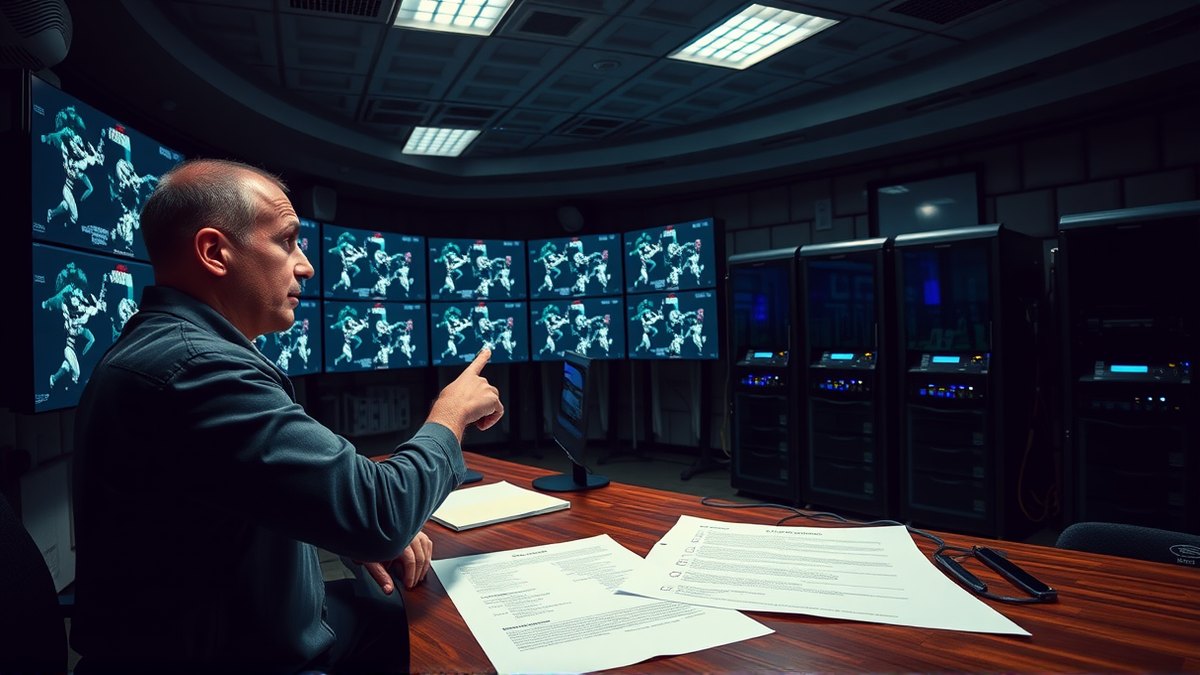
FIFA's questions and answers on semi-automated offside include one unadorned sentence: the exclusive owner of the tracking data and ball data collected by the system is FIFA. When eleven players in the penalty area, twelve cameras under the stadium roof, and a sensor inside the ball work together, the club, the player, and the broadcaster do not collect the harvest. The federation does.
This is not a procedural detail. Match data has become a sellable asset, and the market has organized itself around it. Genius Sports supplies data, video, and integrity services to leagues, bookmakers, and media. It serves more than 300 betting brands and delivers data and streams from more than 240,000 events a year. Clubs and leagues sign contracts not for hardware, but for data rights.
Biometrics off the pitch
A second data stream forms outside of matches. Wearable sensors from Catapult measure the physical load on a player's body during training and games. The company employs around 580 people and works with Real Madrid, Chelsea, and La Liga, among others. This is a far more sensitive dataset than passing statistics.
A Chinese analysis of the sports market devotes a separate paragraph to this issue. It notes that when data from tens of thousands of players and spectators is gathered at a single event, the risk of breaches increases. The authors call for a data governance framework that clearly defines ownership and usage limits. They use strong language: the goal is to ensure a player does not become a "human transparent to data".
Three sides, one question
The dispute involves at least three parties. The league and the organizer treat data as part of a product whose value they want to control. The club sees it as a training and transfer advantage. The player holds a record of their own body that they do not control, and often do not even know to whom it has been sold.
The analogy with US college sports is telling. There, too, the question arose of who benefited from someone else's work and image. The answer came only through a class action and a settlement of 2.75 billion dollars approved in June 2025, which opened the way for universities to share revenue with players.
As long as the rulebook does not specify whose measurement it is, that measurement belongs to whoever put up the camera.
The conclusion is simple and uncomfortable. Technology in sport will not stop developing because it gives referees accuracy and leagues money. But without settling data ownership, every new rollout will expand a pool of assets with unregulated legal status. That means every new sensor and every new camera. Federations have already answered that question for themselves. Players have not.
Sources
4- 01Semi-automated offside technology — FIFA (Who owns the data)EN
- 02科技赋能足球:大数据分析如何重塑球员评估与转会决策ZH
- 03Genius SportsEN
- 04House v. NCAAEN
All figures and quotations in this text come from the sources listed below.
Content prepared by the editorial team with AI assistance.
Daniel Fisher
Comments
0- No comments yet — be the first.