UN: the world wastes over a billion meals a day and 1.05 billion tonnes of food
In 2022, 1.05 billion tonnes of food went to waste, or 132 kg per person. Food loss and waste account for 8-10 percent of global greenhouse gas emissions and cost about a trillion dollars.
 Helen MarshCulture, food and lifestyle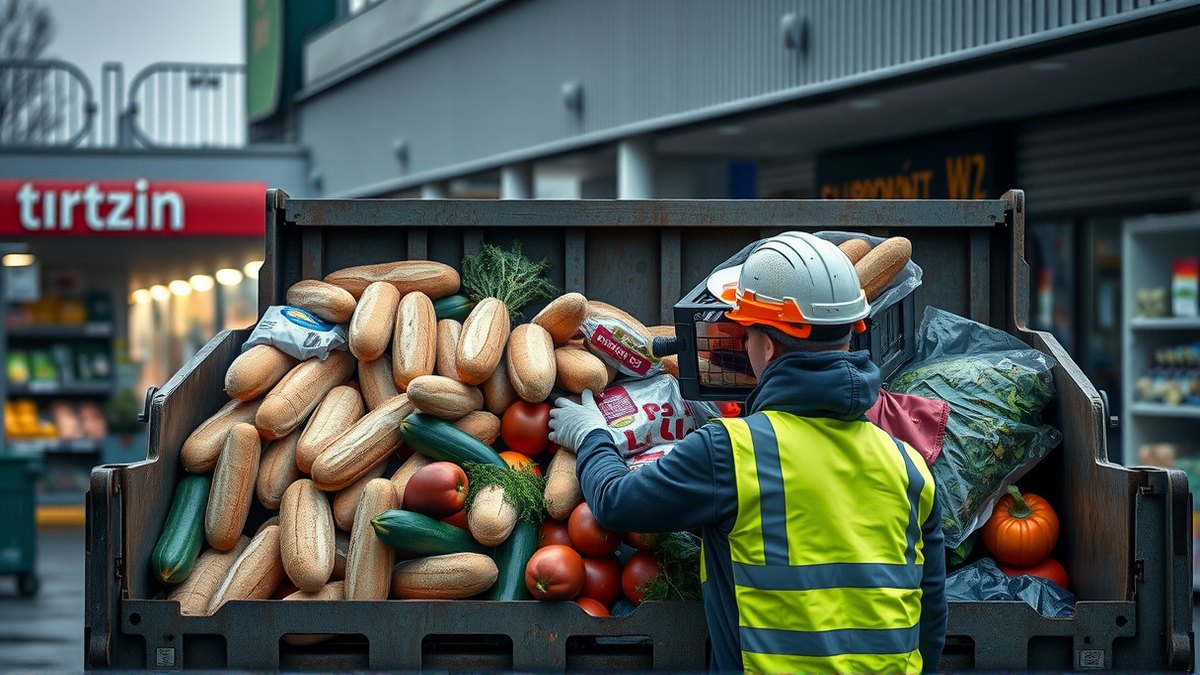
The United Nations Environment Programme (UNEP) estimated the global scale of the problem in its Food Waste Index Report 2024, prepared with the British organisation WRAP. In 2022, the world generated 1.05 billion tonnes of food waste, including inedible parts. That is 132 kg per person and close to a fifth of all food available to consumers.
The source of the waste breaks down simply: 60 percent from households, 28 percent from food service, and 12 percent from retail. The authors stress that this is not a problem of rich countries alone. Average household waste differs by just 7 kg per person between high-income, upper-middle-income, and lower-middle-income countries.
Climate and money
Food loss and waste produce 8-10 percent of annual global greenhouse gas emissions, almost five times more than the entire aviation sector. They also drive serious biodiversity loss, occupying an area equal to nearly a third of the world's agricultural land. The authors estimate the cost to the global economy at about a trillion dollars.
Who measures, reduces
The report does more than count; it shows what works. By 2022, only 21 countries had included food loss and waste reduction in their national climate plans (NDCs). Only four G20 countries have estimates suitable for tracking progress towards Sustainable Development Goal 12.3, which calls for halving waste at retail and consumer level by 2030: Australia, Japan, the United Kingdom, and the USA. The European Union has them too. Canada and Saudi Arabia have comparable data for households.
Results come where policy and partnerships were introduced. Japan cut its food waste by 31 percent, and the United Kingdom by 18 percent. British public-private partnerships helped cut more than a quarter of household food waste per person between 2007 and 2018. UNEP also lists similar programmes in Australia, Indonesia, Mexico, and South Africa.
Institutional backing
Measurement is a prerequisite for action. The Food and Agriculture Organization (FAO) has run the Technical Platform on the Measurement and Reduction of Food Loss and Waste since December 2015. It was established jointly with the International Food Policy Research Institute (IFPRI) after a recommendation by G20 agriculture ministers. The platform co-founded the Food is Never Waste coalition, led by FAO and UNEP, and works towards Goal 12.3. Without data there is no policy, and without policy there is no reduction. That is the main argument of both institutions.
Sources
3- 01UNEP Food Waste Index Report 2024EN
- 02World squanders over 1 billion meals a day — UN reportEN
- 03FAO: Technical Platform on the Measurement and Reduction of Food Loss and WasteEN
All figures and quotations in this text come from the sources listed below.
Content prepared by the editorial team with AI assistance.
Helen Marsh
Comments
0- No comments yet — be the first.