Mazda Puts LiDAR on the CX-6e as Robotaxi Scale Debate Turns to Depots
Mazda added a LiDAR suite to its CX-6e electric SUV on 27 September, giving the Changan-built model what the company calls advanced L2 autonomy. A separate industry argument published a day earlier says the real robotaxi bottleneck is not software but servicing.
 Daniel FisherSport, cars and travel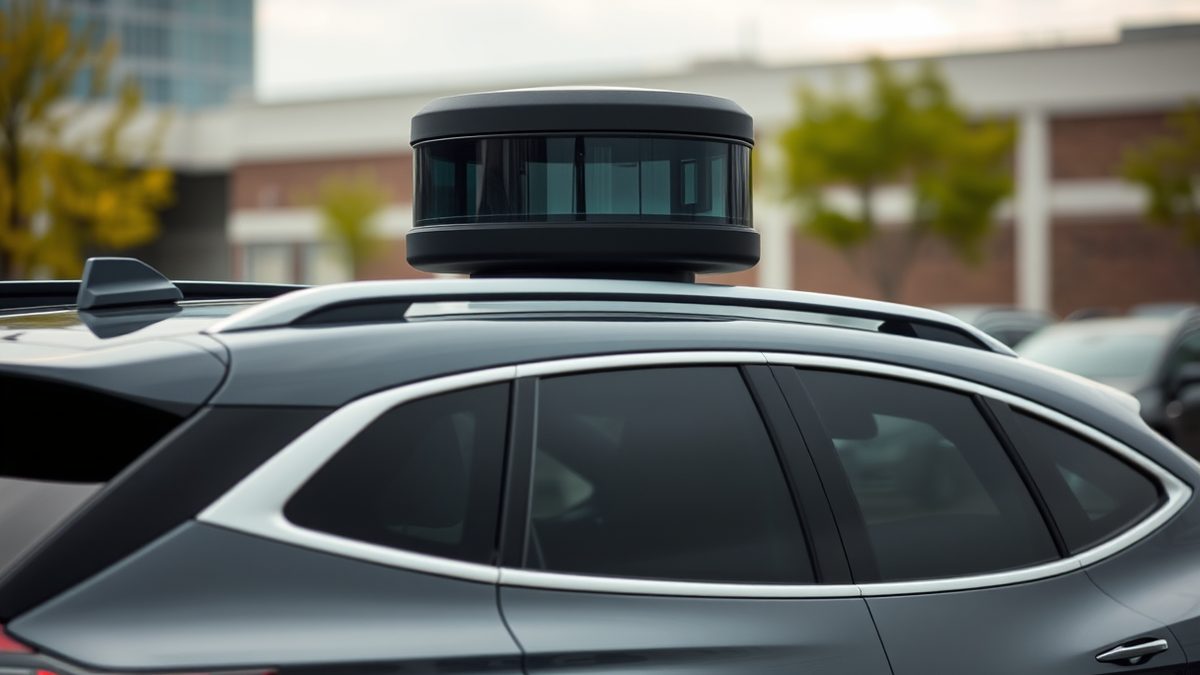
Electrek reported on 27 September that Mazda's CX-6e now ships with a LiDAR suite enabling "advanced L2" autonomy, navigation on autopilot (NOA) and automated parking. The car is the second EV from Mazda's joint venture with China's Changan Auto and the venture's first global product, having already launched in Asian and European markets earlier this year. Mazda quotes a 77.94 kWh lithium-iron-phosphate battery, up to 600 km of range and a 190 kW rear motor.
The sensor count is the story. According to Electrek, the LiDAR works alongside 11 high-definition cameras, 12 ultrasonic sensors and three millimeter-wave radars, feeding onboard computers for highway and urban navigation. Mazda says it ran the system through 11 government-sanctioned high-risk scenarios and received a TOP Intelligence Intelligent Safety Challenge certificate from CATARC. AEB figures are specific: stopping for stationary objects in front up to 110 km/h, for pedestrians longitudinally up to 90 km/h, and for crossing pedestrians and cyclists within 60 km/h.
None of this makes the CX-6e a robotaxi, and Mazda does not sell it in the US.
The naming does echo Chinese-market Teslas, where Electrek notes "Full Self Driving" hardware is marketed as "Tesla Assisted Driving." That is a labelling distinction, not a capability one.
The depot problem
The harder question sits elsewhere. The Robot Report published a piece on 26 September by Dan Keene, co-founder of Aseon Labs, arguing that robotaxi scale breaks not on driving software but on what happens between rides. Waymo is in 14 cities; Uber is in more than 15,000 and did 3.9 billion trips last quarter, the piece says. It processes Waymo's entire weekly ride volume every 17 minutes. Keene's numbers on the servicing gap: each reset costs roughly two hours, and of 86 million Waymo miles reported through 2025, only 54% carried a passenger, according to California data cited in the article. Waymo has logged more than 220 million autonomous miles and gives around half a million paid rides a week. The piece carries a disclosure that Keene's company is building robotic charging, cleaning and inspection stations.
The land is gone. The site a depot needs, industrial-zoned and wired for power, is the one everyone wants.
Timelines make the arithmetic worse. California's regulator targets six months just to energize a standard charging site, the article states. A new circuit runs 1.9 years, a substation upgrade 2.8, a new substation 8.9, per city. Keene argues the industry needs a standard servicing unit rather than bespoke depots, and notes Waymo has already shed layers: Zeekr builds its Ojai vans, while Moove, Avomo, Avis and Flexdrive run depots.
The robotaxi industry is not short of autonomy research. A separate benchmark published on 22 September, DrivingBench, put frontier models behind the wheel of a real Toyota Corolla. GPT-6 Astra completed the course on its second attempt in 5:22, using 46.6M tokens at a list cost of $7.74. Claude Fable 5.1 reached 45% progress on its third attempt and did not finish. Grok 4.6 topped out at 11%, and GPT-5.6 Sol at 6%. Read together, the three sources point the same way. Driving is being solved faster than the business around it. SemiEngineering's 24 September piece on autonomy levels for design agents makes a related point for EDA: a level label tells you little unless it is tied to scope, decision rights, validation depth and who signs off. Robotaxis are discovering the same thing about depots.
Sources
4- 01Mazda adds LiDAR to CX-6e, rolls out "self driving" tech in ChinaEN
- 02From 14 cities to 15,000: What it will take to scale robotaxis?EN
- 03Show HN: DrivingBench - Frontier LLMs Driving a Real Toyota CorollaEN
- 04Autonomy Levels For Design Agents: L1 To L5 ExplainedEN
All figures and quotations in this text come from the sources listed below.
Content prepared by the editorial team with AI assistance.
Daniel Fisher
Comments
0- No comments yet — be the first.