Mureka V8 beats Suno V5 and claims a new music genre
Kunlun Tiangong showcased Mureka V8 at a music club concert, claiming the model outperformed Suno V5 in musician tests. The CEO frames this as a new genre, not just another tool.
 Grace OkonkwoAI, models and technology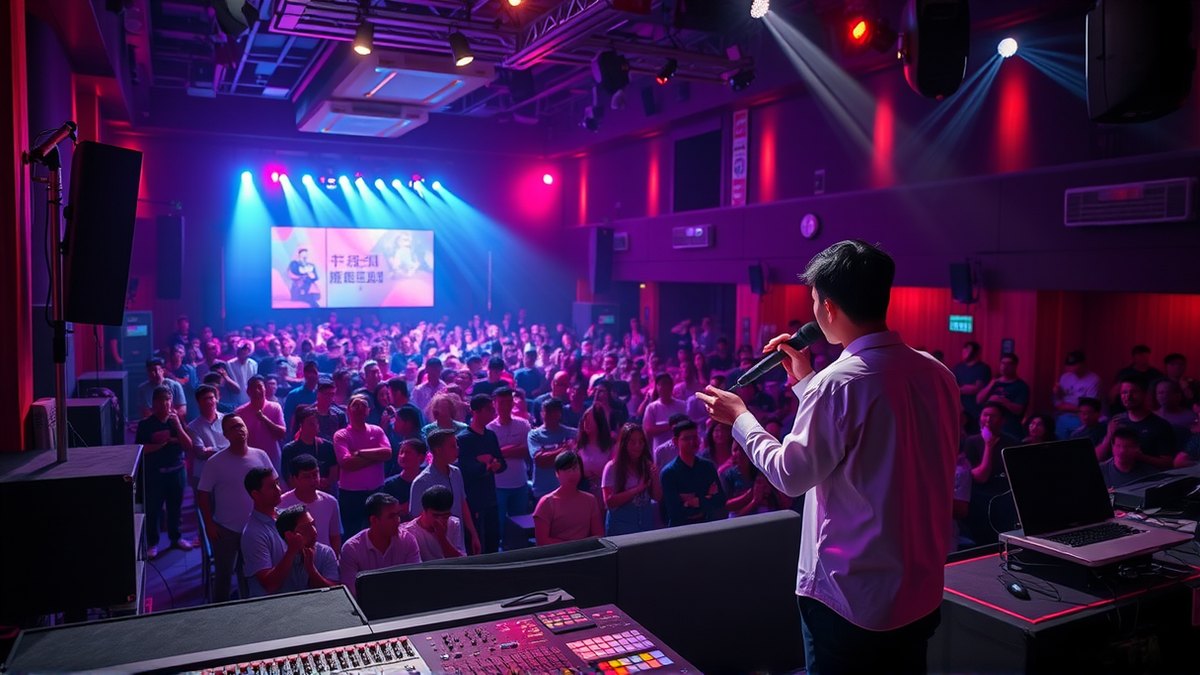
The launch took place in a music club, not a conference hall. In January 2026, Chinese company Kunlun Tiangong presented the Mureka V8 model. They turned the press conference into a concert, with music generated by the new system serving as the backdrop for the video. Promotional materials highlighted that in tests with professional musicians, Mureka V8 beat Suno V5. The latter is considered the leading music model from Silicon Valley. Mureka V8 took first place in that narrow category.
From "it can be generated" to "it can be released"
The most interesting part of the argument is not the sound itself but the stage the models have reached. According to the industry outlet 量子位, earlier AI output stopped at "it can be generated". The new generation moves the bar to "it can be released", meaning a product that meets market standards. The test authors checked four dimensions: singing and expression, musical completeness, production quality, and market fit. Mureka V8 matches its performance technique to the chosen gender of the vocalist. This makes it sound less mechanical. From a single line of lyrics, it generates a track close to three minutes long, rather than two, as earlier versions did. The declared "Eastern aesthetic" is part of the deal. The model naturally renders Chinese sounds, as heard in a generated New Year song.
Fang Han, chairman and CEO of Kunlun Wanwei, speaks of a mission broader than selling a tool: "We want music to become a form of expression available to everyone." In his view, good AI tracks are becoming a new genre, like jazz, country, or rap. The Mureka platform is to be a lighthouse for the industry. Chinese lyricist and producer Gao Xiaosong took part in the launch. People from leading Chinese record labels also reported on the event.
The market responds
The enthusiasm of model makers collides with the reaction of the recording industry. In August 2026, American rapper Dr. Dre publicly admitted he uses AI in his work. He compared it to the drum machine and the synthesizer: "It's a whole new creative tool, I accept it and I can't wait to see what comes of it." He added that those now-common devices also met resistance when they appeared. He did not reveal whether he generates whole tracks or only separates stems. Streaming platforms have meanwhile started tightening their rules on "AI slop". Tidal announced that fully generated tracks will not receive royalties. Spotify introduced a label for artificial vocalists imitating real people. According to data from the platform Deezer, half of the new music reaching the service today is generated by AI.
Sources
2All figures and quotations in this text come from the sources listed below.
Content prepared by the editorial team with AI assistance.
Grace Okonkwo
Comments
0- No comments yet — be the first.