China sets 60 trillion yuan retail target as restaurant chains close outlets
China aims for 60 trillion yuan in retail sales by 2030. Meanwhile, restaurant chains are closing outlets, and home robot sales on key platforms jumped 95.1 percent in July.
 Naomi FeldmanCulture, food and lifestyle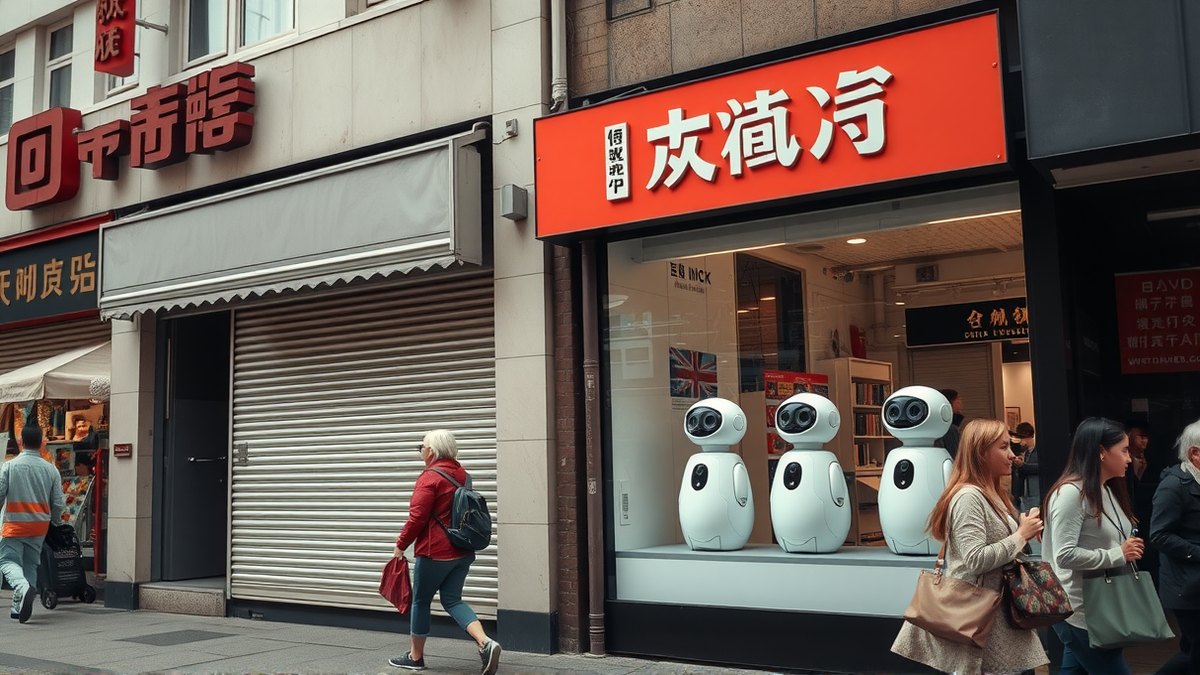
China's consumption expansion plan targets roughly 60 trillion yuan in retail sales of consumer goods by 2030. The baseline is specific: in 2025, retail sales already exceeded 50 trillion yuan. Passenger car sales reached 23,744,000 units, while retail sales of home appliances and telecom devices each topped one trillion yuan, according to 第一财经. The document outlines 20 specific measures and identifies trillion-yuan categories and "ten-billion-yuan" markets: green, smart, and health-related consumption.
Hardware data offers the most insight for kitchen watchers. Data from a major e-commerce platform for July 2026 shows sales of intelligent embodied robots up 95.1 percent, exoskeletons up 39.5 percent, action cameras up 24.7 percent, and robot vacuum cleaners up 19.4 percent. Home robot sales nearly doubling in a single month is the clearest sign that home automation has stopped being a trade-fair curiosity.
Restaurants: expansion is over
The food service sector looks very different. A roundup by 界面新闻 in its 消费 section features headlines about retreating chains. The restaurant 西贝 is "on the edge," closing outlets and delaying payments. 美团 co-founder 王慧文 has publicly declared his intent to buy the chain, praising its hygiene and taste. Shares in the 九毛九 group are falling sharply. The brand 很久以前羊肉串, with 148 outlets and an average bill of 88 yuan per person, is preparing to list as the "first barbecue company." The "healthy fast food" segment is growing instead. On 24 September 2026, Hangzhou opened the 600th outlet of the KPRO chain. That same day, the chain published a "balanced" seven-day meal plan developed with the Shanghai Nutrition Society.
Shops and holidays
The 零售 section of the same outlet describes a shift in the holiday basket. Mooncakes with low sugar, a low glycaemic index, and whole grains are selling well, including versions for pets. Members of the 山姆 chain resell these items at a markup of nearly 100 yuan. At the same time, classic, fatty, and expensive products are being cleared at discounts. The brand 美心 cut prices by as much as 60 percent, and hotel mooncakes from five-star properties appeared on resale platforms at about 30 percent of the list price. The market is heading for a second consecutive year of decline. A third observation concerns bulk snack shops: the chains 赵一鸣零食 and 好想来 were caught in 2026 for irregularities in weighing goods. This is an error consumers see immediately on the receipt.
Three numbers, one thesis
Four numbers show the direction of China's food market: 50 trillion yuan in retail sales already achieved and 60 trillion as the 2030 target, a 95.1 percent rise in embodied robot sales in a single month, and a second year of decline in the mooncake market. The first two point to the scale of automation and the treatment of consumption as an economic flywheel. The third and fourth indicate that in food service and retail, the priority is no longer expansion but retaining the customer: a cheaper product, stable taste, and a receipt without surprises.
Sources
3- 01第一财经: 目标60万亿元,商品消费扩容升级方案落地ZH
- 02界面新闻 (消费)ZH
- 03界面新闻 (零售)ZH
All figures and quotations in this text come from the sources listed below.
Content prepared by the editorial team with AI assistance.
Naomi Feldman
Comments
0- No comments yet — be the first.