Austria Opens Peer-to-Peer Electricity Sharing on Oct. 5 as Grid Rules Lag
Austria will let households and businesses share self-generated electricity from Oct. 5, but reduced grid charges for those arrangements will not take effect until Jan. 1, 2027, according to pv magazine.
 Dr. Amara PatelEconomy, business and world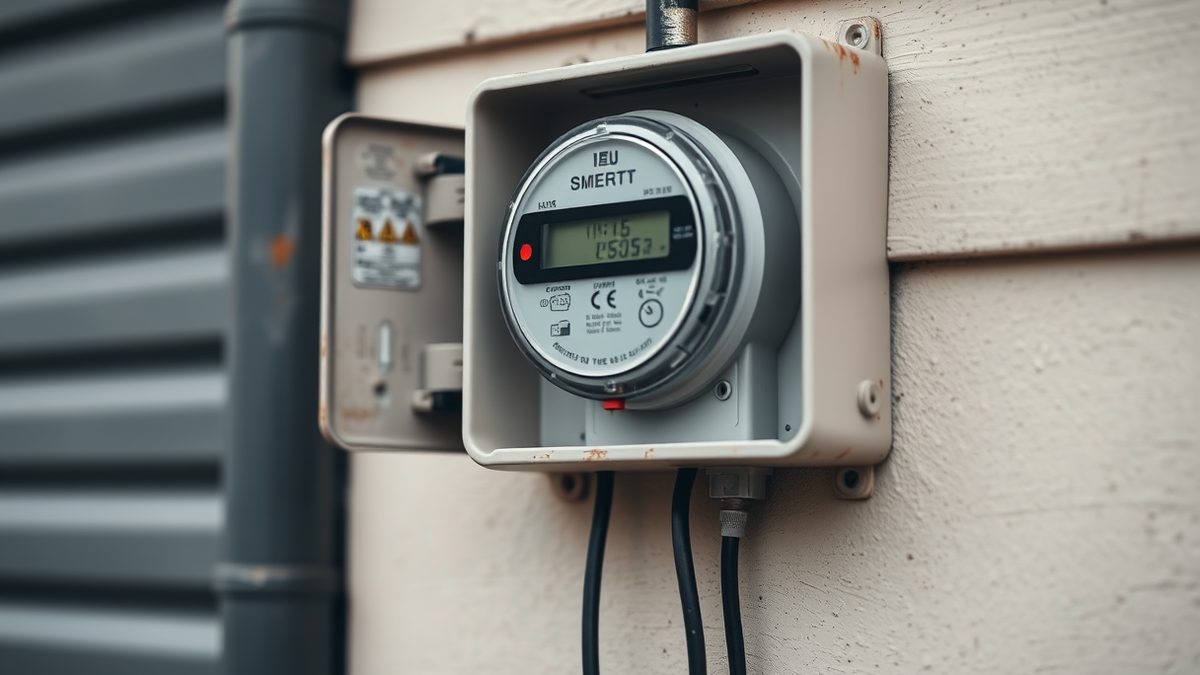
The new rules come into force on Oct. 1, and the framework becomes usable in practice on Oct. 5, Austria's coordination office for energy communities says. Participants will not need to set up a separate legal entity. Unlike energy communities, peer-to-peer deals may be run for profit.
That is the newest grid-electrification signal in the dossier, and it is a small one. The money question, who pays for the wires, is deferred.
Under the initial model, only metering points assigned to the same grid operator can take part. The coordination office expects implementation across multiple grid areas, and therefore nationwide sharing, from April 2027. Grid charges stay unreduced between October and December 2026. An amended grid-charge regulation is scheduled to take effect on Jan. 1, 2027, cutting charges for local and regional citizen energy communities, peer-to-peer arrangements and joint generation facilities. Until the end of 2026, only members of local or regional renewable energy communities remain eligible for reduced grid usage charges, according to pv magazine's 28 September report. To qualify for reduced tariffs later, peer-to-peer participants will have to define a specific proximity zone when registering. The framework distinguishes main line, site, local and regional zones.
Storage reform in China is moving faster and at far larger scale.
Zhejiang province has opened its electricity spot market to independent grid-side batteries, under a notice issued on Sept. 23 by the Zhejiang office of the National Energy Administration, the provincial development and reform commission and the provincial energy bureau. A project list attached to the notice covers 40 projects totalling 2.54 GW/5.1 GWh. Of those, 28 projects totalling 2.13 GW/4.27 GWh are in commercial operation and centrally dispatched, making them eligible for both the energy and frequency-regulation markets. Six further operating projects, totalling 0.11 GW/0.22 GWh, can enter only the energy market. Zhejiang plans to move storage to price-and-quantity bidding from Jan. 1, 2027, pv magazine reported on 26 September. Projects not registered as storage will, in principle, not be dispatched in normal grid operation.
Manufacturing capacity is being announced on a different clock.
Spanish power electronics manufacturer Power Electronics began construction of a 210,000 m2 campus in Houston, Texas, on 28 September, the company said. The roughly 21-hectare site will have two buildings and an annual production capacity of up to 40 GW once fully operational. It will make equipment for solar PV, energy storage, data centres, electric mobility and industrial applications. The company expects more than 400 jobs. It is also expanding its Llíria site in Valencia, Spain, from 100,000 m2 to 150,000 m2, and says global annual production capacity will reach 105 GW after both expansions.
Not every number in this space is about generation. Amazon said this week it will invest more than $100 million in a 585,000 sq ft advanced manufacturing facility in Greenwood, Indiana. The facility is expected to create 300 skilled manufacturing and engineering jobs and to launch by 2028, The Robot Report reported on 25 September.
On the demand side, fleets are already buying. JUNA, a joint venture between German logistics firm sennder and Sweden's Scania, announced on 26 September the deployment of its 110th electric semi truck. It plans as many as 40 more before the end of the year, Electrek reported. Scania's R45 packs a 450 kW powertrain and a 624 kWh battery.
Charging remains the binding constraint. Tesla launched high-volume production of its Semi in Sparks, Nevada, on Thursday. The long-range version is estimated at 500 miles per charge, and the standard version at 325 miles, Ars Technica reported on 26 September. Tesla's own website showed two public megawatt chargers operating in the LA area. Dan Priestley, who leads the Semi program, said the company plans to open 30 by the end of the year.
Put the Austrian timetable next to those orders and the sequencing looks inverted. Vehicles and factories are arriving before the tariffs, markets and chargers that decide whether they pay off.
Sources
6- 01Austria to enable peer-to-peer electricity sharing from OctoberEN
- 02Power Electronics starts construction on 40 GW U.S. factoryEN
- 03Chinese province moves grid-side batteries into spot marketEN
- 04Tesla's big electric truck faces an even bigger infrastructure challengeEN
- 05JUNA puts more than 100 Scania electric semi trucks to workEN
- 06Amazon to invest $100M in new Indiana manufacturing facilityEN
All figures and quotations in this text come from the sources listed below.
Content prepared by the editorial team with AI assistance.
Dr. Amara Patel
Comments
0- No comments yet — be the first.