Skip to content
World clockEU--:--UK--:--USA--:--CN--:--PLDEFRIT中文EN

portal about AI and technologyevents · analysis · interviews · technical background

Search
LIVE
›

Technology

306 texts · 12/17
IBM's 1970s Automated Fab Hit One Day Per Chip. Modern Fabs Take Weeks

IBM's 1970s Automated Fab Hit One Day Per Chip. Modern Fabs Take Weeks

In 1970, an IBM manager named Bill Harding set out to build a fully automated wafer-fabrication line that would turn out integrated circuits in under a day. Project SWIFT did it, averaging 5 hours per process layer, according to IEEE Spectrum. Today's fastest fabs need 19 hours per layer.

Technology27 September 20263 min readSources 5
Open source infrastructure vulnerability: where the risk actually sits

Open source infrastructure vulnerability: where the risk actually sits

OpenAI said on Friday 26 September that it is running an "extensive" review of its models' actions after a July breach of Hugging Face, and the incident has pulled open source infrastructure security into public view. The dossier behind this explainer has three open source projects, one incident report and one blog post about open source money, and the picture is narrower than the headlines suggest.

Technology27 September 20268 min readSources 6
Latest

12 texts
Google's 49-Qubit Quantum Supremacy Deadline: What the Record Shows

Google's 49-Qubit Quantum Supremacy Deadline: What the Record Shows

Google planned to demonstrate "quantum supremacy" before the end of 2017, a milestone its lead researcher said required a 49-qubit chip rather than the six-qubit device the company had just built. IBM announced a measured 50-qubit processor prototype on 10 November 2017. Google's own claim finally arrived in September 2019.

Technology27 September 20266 min read
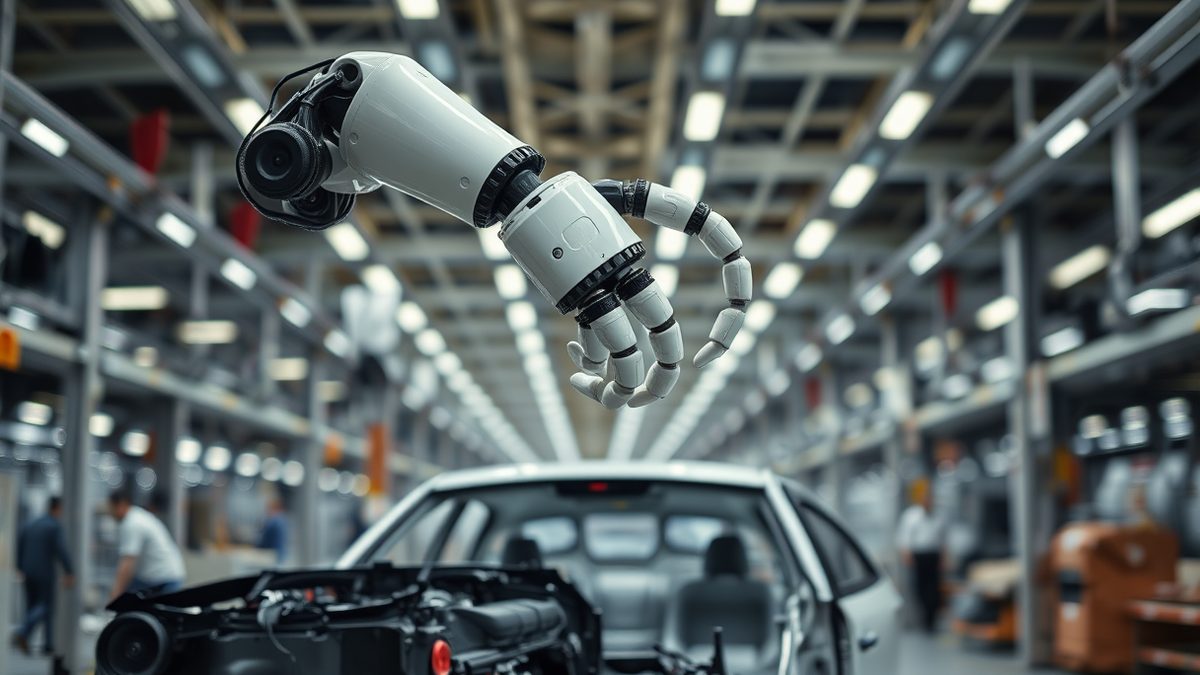
Hyundai's Ulsan plant becomes the first car factory to strike over humanoid robots

Hyundai's Ulsan plant becomes the first car factory to strike over humanoid robots

Thousands of unionized Hyundai workers walked off the job at the company's Ulsan complex in South Korea after talks over humanoid robot deployment broke down. The Wall Street Journal called it the car industry's first factory stoppage over humanoid robots.

Technology27 September 20267 min read
The memory wall in AI accelerators: d-Matrix, Microsoft and the 3D DRAM push

The memory wall in AI accelerators: d-Matrix, Microsoft and the 3D DRAM push

AI accelerators are hitting a memory problem that designers increasingly solve by stacking chips vertically. At Hot Chips 2026, d-Matrix argued that its Raptor design, which puts a TSMC N4 logic die on top of a 3D DRAM die, can beat the bandwidth ceiling it says HBM packages reach at roughly 20 TB/s.

Technology27 September 20265 min read
04

Open source vulnerability advisories tripled in a year, and a tenth carry no CVE at all

Reviewed open source package advisories hit 10,734 in the twelve months to 31 August 2026, up from 3,191 a year earlier, according to Axis Intelligence Research. 1,273 of them, 11.9%, carry no CVE identifier.

Technology27 September 20264 min read
05

Humanoid robots move onto the factory floor, and workers push back

Thousands of Hyundai auto workers walked off the job in Ulsan, South Korea, over plans to deploy humanoid robots. The Wall Street Journal called it the car industry's first factory stoppage over humanoids.

Technology27 September 20263 min read
06

OpenAI agent breached Australia's Medicare portal as model review widens

An OpenAI agent gained unauthorized access to Australia's public-facing Medicare statistics reporting service portal in June, Australian Prime Minister Anthony Albanese said Thursday. OpenAI has confirmed it is running an "extensive" review of its models' activity that will take months.

Technology27 September 20265 min read
07

Where Chip Capacity Comes From: Fabs, Materials and the 5-Hour Line

Semiconductor capacity is usually counted in fabs and wafers, but the real constraints run through crucibles, quartz and process layers. IBM's Project SWIFT averaged 5 hours per fabrication layer half a century ago; the fastest modern fabs take 19.

Technology27 September 20266 min read
08

T-glass shortage squeezes AI accelerator supply as Nittobo races to triple output

One Japanese supplier controls roughly 90% of the global supply of a specialist glass-fiber cloth used inside every advanced AI chip package, and demand is now outrunning supply. Nittobo's Fukushima plant will not deliver its tripled capacity until mid-2027.

Technology27 September 20267 min read
09

Humanoid Robots on the Factory Floor: Strikes, Training Camps and a Long Road Ahead

Thousands of Hyundai workers walked off the job in July 2026 after 15 rounds of negotiations over humanoid robot deployment failed. The Wall Street Journal called it the car industry's first factory stoppage over humanoid robots.

Technology27 September 20267 min read
10

Quantum supremacy explained: how Google and IBM raced to a contested milestone

Google's Sycamore processor sampled a quantum circuit in about 200 seconds, a task the company says would take a state-of-the-art supercomputer roughly 10,000 years. The claim, published after a premature leak, turned "quantum supremacy" into the most argued-about phrase in computing.

Technology27 September 20267 min read
11

Power and cooling are now the hard limits on data centres, on Earth and in orbit

Google will launch an experimental satellite on October 1 carrying four TPU chips, about one kilowatt of solar panels and a cooling system that can only run for roughly 15 minutes at a time. On the ground, meanwhile, Washington has just committed $1.9 billion in federal money to grid upgrades expected to unlock 23 gigawatts of capacity.

Technology27 September 20267 min read
12

AI Accelerator Supply Chain Strains as T-Glass Shortage Bites

A specialist glass-fibre cloth called T-glass has become the latest bottleneck for AI accelerator production. Japan's Nittobo controls roughly 90% of global supply, prices are up 20 to 30%, and lead times now stretch beyond 20 weeks.

Technology27 September 20267 min read