South Korea will replace hard limits on grid connections with curtailable access and competitive bidding, aiming to connect more than 100 GW of renewables by 2030, the Ministry of Climate, Energy and Environment said on 1 October.
Economy1 October 20264 min readSources 15
South Korea's Ministry of Climate, Energy and Environment lifted restrictions on new renewable energy connections in the Honam region on 1 October. The move is part of a package that will raise national transmission-level hosting capacity from 119 GW to 171 GW by 2030.
Economy1 October 20265 min readSources 4
On 1 October, fleet operators including IKEA, EDF, Geopost and DFDS wrote to European Commission president Ursula von der Leyen urging her not to weaken heavy truck CO2 standards. That same day, fresh analysis argued Europe will have enough Made-in-EU battery cells by 2030 to meet demand.
Economy1 October 20264 min readSources 13
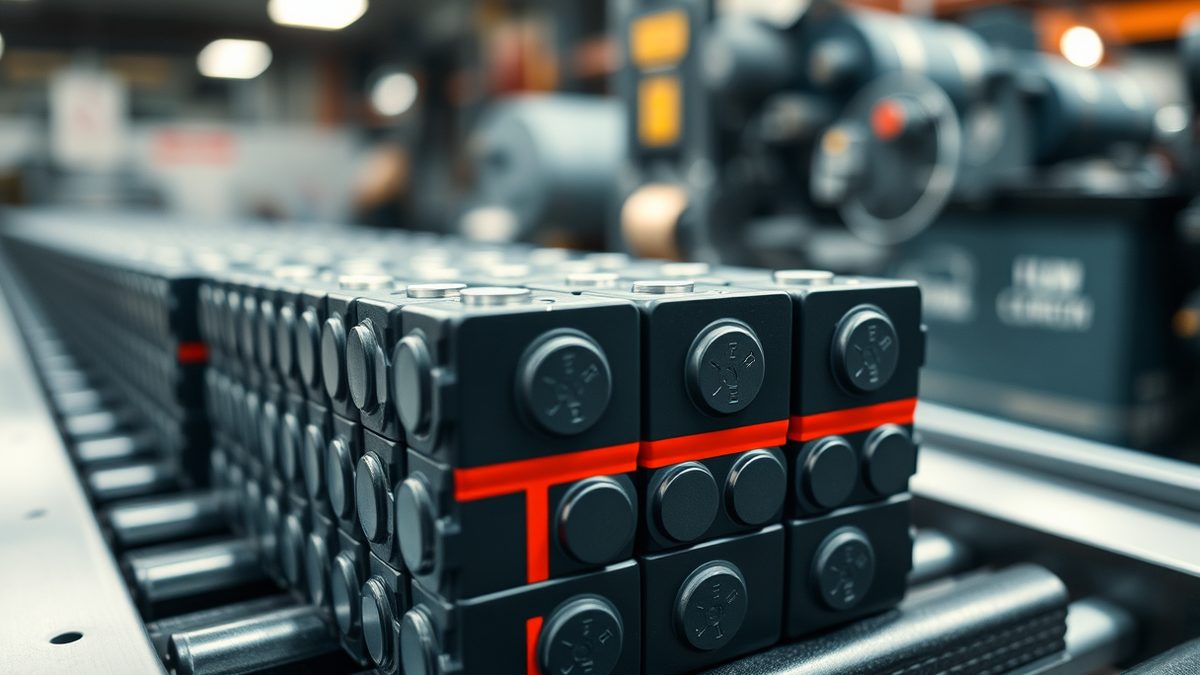
Europe will have enough battery cells to meet the demand of its Industrial Accelerator Act by 2030, but it still cannot make enough cathode active materials to build those cells, according to analysis by Transport & Environment published on 30 September.
Economy1 October 20265 min readSources 5
Europe has enough battery cell capacity to meet the demand created by its own industrial rules, but only if every announced project actually gets built, according to analysis published by Transport & Environment on 30 September. The fight now moves to midstream components that China dominates.
Economy1 October 20264 min readSources 6
The EU's energy import bill jumped by about €100 billion during the US-Iran conflict. On 1 October 2026, the industrial fallout dominated Brussels as fleet operators, space engineers and grid planners pushed back on the same problem.
Economy1 October 20265 min readSources 12