The world's most complex machine: why nobody can copy ASML
EUV machines sit at the center of the US-China chip dispute. Building one requires a network of specialized suppliers, yet Europe has no factories to buy them.
 Dr. Amara PatelEconomy, business and world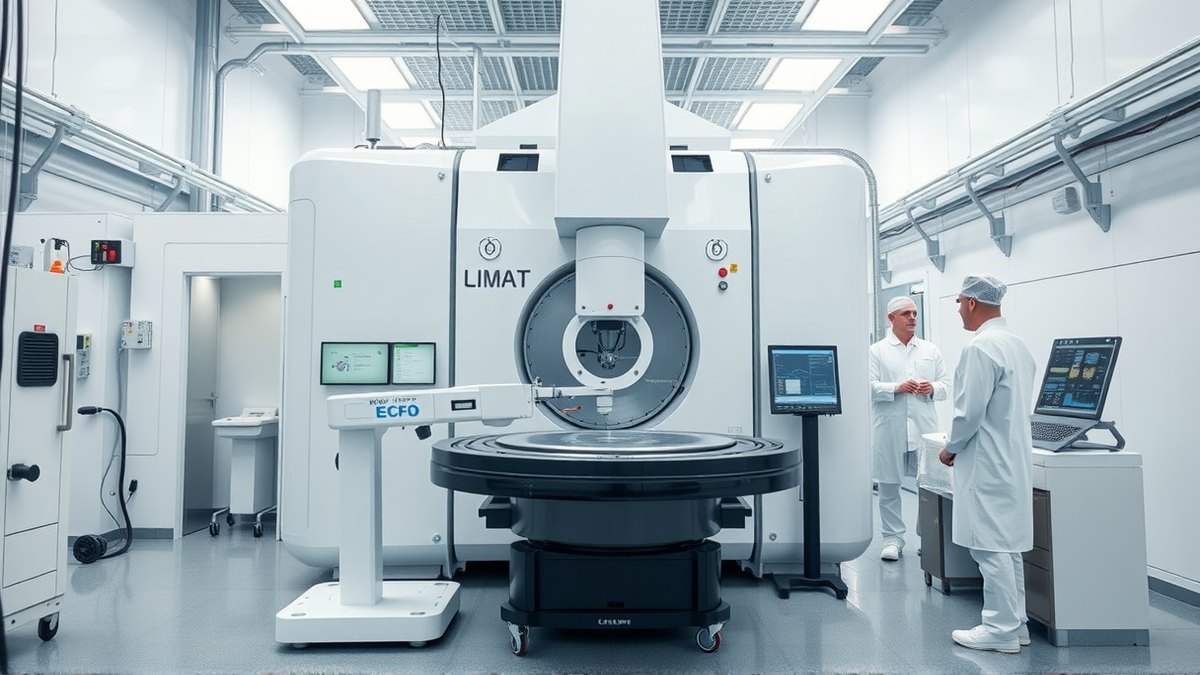
Export controls on lithography equipment work because of the machine itself. ASML's EUV systems are considered the most complex industrial machines ever built. They have become a central point of contention in the chip dispute between the United States and China. Industry accounts indicate that many companies were involved in their development, and a single machine represents technology worth hundreds of millions of dollars.
Extreme ultraviolet and a network of subcontractors
Wavelength is the key. Creating structures below 5 nanometres requires light in the extreme ultraviolet range. ASML is the only company able to produce such systems at scale. The company could not do it alone. Its advantage is the ecosystem: Zeiss provides optics of extreme purity, and Trumpf supplies high-power lasers. Rebuilding that network takes years and billions, not just one successful design.
Washington suspects a leak
These machines matter so much that any information about a possible technology transfer triggers a political reaction. The American side reportedly raised the charge that an advanced EUV machine had reached China. Earlier, Zeiss and Trumpf were named as the companies building the unique components. This shows how narrow the bottleneck of the whole chain is.
Europe's problem is the reverse
Frank Heemskerk, who handles public affairs at ASML, presented an uncomfortable thesis in the Dutch debate: the company sells practically nothing in Europe because there are no factories there that would buy its machines. Demand is concentrated in the United States and Asia. Heemskerk admitted that the machines are in high demand in the US and China. He also appealed to Brussels to use the market power that Europe does have.
This reverses the usual understanding of technological sovereignty. The Union holds a unique tool for making chips, but it has no buyer for it. Export controls therefore work as leverage over others, and as a lens showing what Europe lacks. For Poland, which aspires to a place in the European semiconductor chain, the conclusion is unromantic: without its own demand for advanced manufacturing, Poland's presence in the sector will remain that of a service supplier, not a technology provider.
The scale of precision explains why the export of a single machine has become a matter of state. EUV is needed from the 5-nanometre generation upwards. China currently has access only to older lithography technologies. Attempts to build its own chain, undertaken by SMIC and Huawei, are costly and drawn out. In the background remains the charge that a modern EUV machine reached China despite sanctions. The American side reportedly reported this publicly.
For Europe, the trouble is twofold: the key technology is created on its territory but sold almost entirely outside it. Decisions about who may buy it are largely made in Washington. Technological sovereignty, then, does not come down to owning a factory. It also means having a say over its customers.
Sources
2- 01EUV-Lithografie: So stellt ASML die komplizierteste Maschine der Welt herDE
- 02Warum diese Chipfirma niemand nachbauen kannDE
All figures and quotations in this text come from the sources listed below.
Content prepared by the editorial team with AI assistance.
Dr. Amara Patel
Comments
0- No comments yet — be the first.