Precision farming: satellites read crop health, Agri-PV costs less yield than feared
A new pair of satellites tracks plant vitality worldwide and spots climate damage. Research from Hohenheim and Jülich shows that Agri-PV cuts yields by less than previously thought.
 Helen MarshCulture, food and lifestyle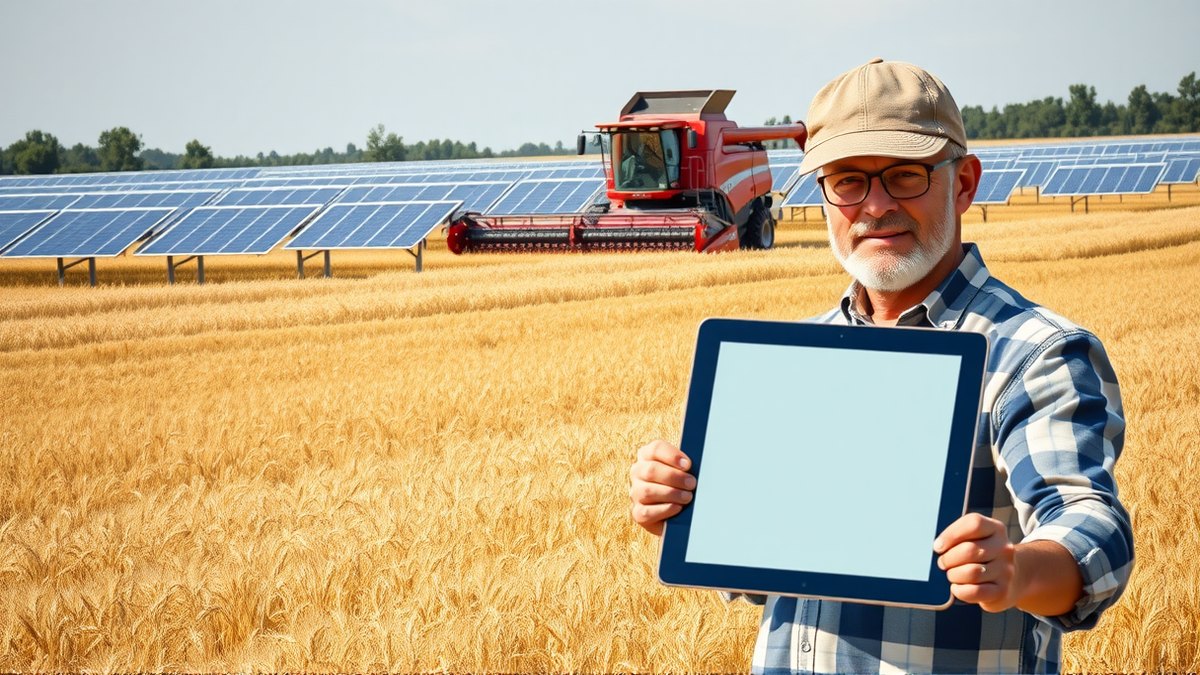
heise.de covers German and European farm technology in its Landwirtschaft section. The latest piece concerns a pair of satellites that map "the vitality and resilience of crops." These satellites monitor plants globally in the green spectrum, flag climate damage, and provide open data. Assessing crop condition is no longer just about walking the field. It has become a data layer supporting decisions on irrigation, fertiliser, and harvest timing.
A satellite does not compete with a drone
Precision operates at different scales. In May 2025, the same outlet reported on the 2024 season: drones saved at least 22,400 fawns in Germany, plus more than 4,000 young hares, hedgehogs, and other animals. Equipped with thermal cameras, the drones locate animals in the grass before the combine harvester passes. This is the same technological trend as the satellites: surveying a field from the air is cheaper and faster than checking it on foot.
Agri-PV: less loss than expected
On 18 August 2026, heise described research by the University of Hohenheim and the Jülich Research Centre into agrivoltaics, which combines farming and photovoltaic panels on the same area. The conclusion: Agri-PV reduces yields less than previously assumed. This figure matters to farms deciding whether to sow a field or shade it. In the same period, the outlet reported on the HofDeal app, which connects customers with local farm shops and allows them to reserve products in advance. This shortens the supply chain on the demand side.
Robots in the orchard and the right to repair
On 28 July 2026, researchers tested a harvesting robot for fruit growing near Lake Constance, designed for apple picking. On 10 July of that year, heise summarised a legal week: an EU ruling on geoblocking and John Deere's commitment to tractor repairability, alongside Interpol action against fraud networks and work on smaller robots. This is not a curiosity. If a farmer cannot repair a machine themselves, the cost of downtime at peak harvest rises sharply.
A climate layer adds context. On 1 September 2026, the head of the European Environment Agency called for investment and adaptation, pointing to irreversible changes in Europe. Precision, whether via satellite, drone, sensor, or robot, responds to growing variability, not its absence.
The same direction in China
The Chinese trade weekly 温室园艺 describes the same shift: on Belgian strawberry plantations, autonomous UV-C robots are being deployed at scale. They circle greenhouses at night, neutralising fungi with ultraviolet radiation, which allows fungicide use to be cut by up to 80 percent. During the 32nd International Horticultural Congress IHC2026 in Kyoto (23-28 August 2026), the ISHS Fellow award went to Prof. 杨其长 of the Chinese Academy of Agricultural Sciences. On 4 September, the 33rd edition of the seed trade fair opened in Beijing. The logic is the same: less chemical, more measurement.
Sources
3- 01heise online — Thema LandwirtschaftDE
- 02heise online: Satellitenduo kartiert Lebenskraft und Widerstandsfähigkeit der ErdpflanzenDE
- 03温室园艺E资讯 (周刊), 2026-09-09ZH
All figures and quotations in this text come from the sources listed below.
Content prepared by the editorial team with AI assistance.
Helen Marsh
Comments
0- No comments yet — be the first.