Humanoids Race to the Factory as China Ships 19,000 Units and Tesla Hits Hand Trouble
China shipped more than 19,000 humanoid robots in the first half of 2026, 77.9% of a global total of nearly 25,000 units, according to IDC figures reported by TechNode on 29 September.
 Rachel NwosuAI, models and technology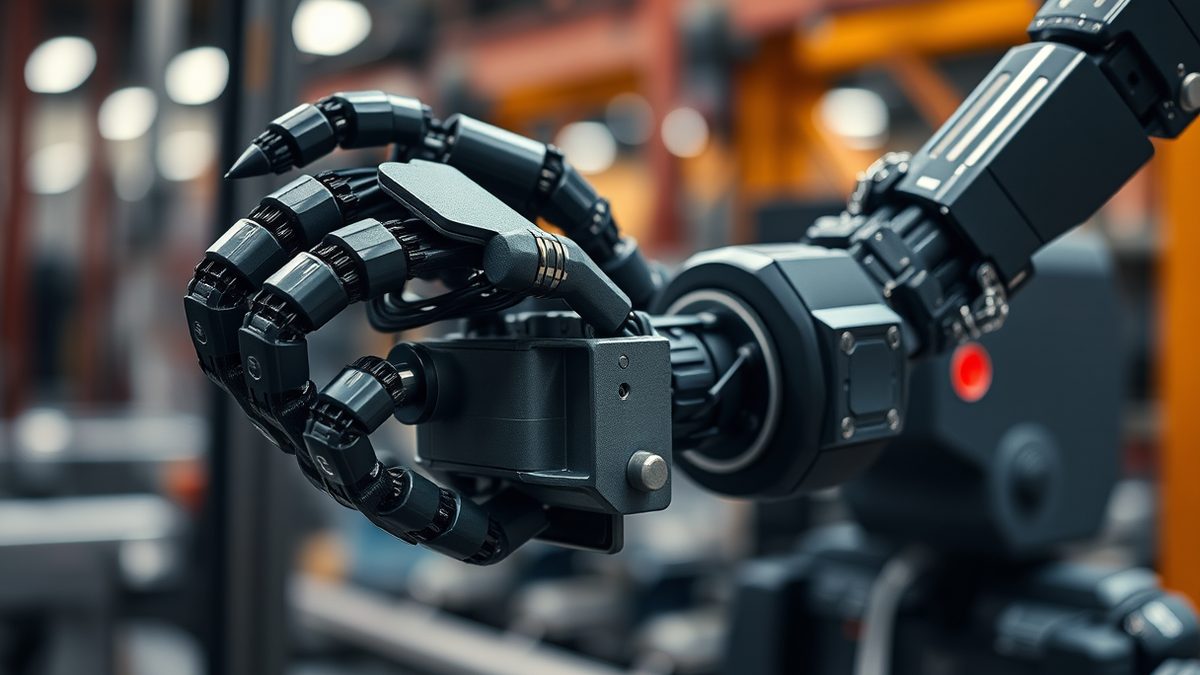
That is a 432.1% year-on-year jump. IDC now expects more than 750,000 humanoid units to ship worldwide in 2030. The same week brought three more data points in the same direction: ANYbotics launched a fleet-management platform on 1 October, Innodata opened a motion-capture lab on 30 September, and Tesla kept running into the messy end of building Optimus.
Start with the newest. ANYbotics AG said on Thursday that it has launched Shift, a cloud platform that plans and runs multi-robot inspection missions and pushes findings into existing asset-management software. The Zurich company, founded in 2016, sells the ANYmal quadruped into energy, power, metals, mining and chemicals. It frames the pitch in money: undetected failures cost the world's 500 largest companies an estimated $1.4 trillion a year in downtime, with a single hour of outage averaging $250,000, according to the company.
Shift ships in four modules. Fleet handles scheduling and control, and can be triggered directly by a plant's distributed control system. Insight combines thermal, acoustic, visual and gas readings with operating conditions such as motor speed and load. Connect turns confirmed anomalies into work orders inside ERP and asset-performance software, with pre-built integrations for SAP, GE Vernova, Siemens Energy, Cognite, SLB and Yokogawa. Maps ties every reading to a physical asset ID. "Shift makes that seamless," said Péter Fankhauser, co-founder and CEO of ANYbotics, in the launch statement. Jacob Euler-Rolle, the company's head of product management, told The Robot Report that a first-time deployment requires no enterprise integration at all.
Note the pattern. The inspection robot is not new. The software layer that makes it useful to a maintenance department is.
A day earlier, on 30 September, Innodata opened a motion-capture lab in New Jersey to generate training data for humanoids and other physical AI. The facility uses infrared optical tracking cameras from Vicon, which the company says measure movement down to the sub-millimeter level. "There isn't enough real-world interaction data, and what exists is expensive and slow to produce," said Rahul Singhal, CEO of Innodata, in the announcement. Franklin Tanner, the company's vice president of robotics and physical AI, told The Robot Report that robots have no equivalent of the internet's text corpus: "Physical AI has to earn its tokens one interaction at a time."
Innodata is betting that direct 3D capture beats inferring motion from 2D video. Tanner gave the example of a mug. Most people pick it up by the handle, but the base works too, unless the mug holds hot liquid. "The context matters, and that's not always encoded in even the data sets that are out there right now," he said. He also flagged a gap: there is still no training data where humans and robots interact, which the lab is working on.
Tesla's hands, and its workers
The factory story looks harder from Tesla's side. Ars Technica reported on 26 September, citing extensive reporting by The Information, that Tesla's Fremont plant stopped making the Model S and Model X in May 2026 and switched line workers and engineers to Optimus. The newest version, Optimus V3, has proved difficult to build: production line equipment struggles to line up components precisely, and the line cannot run too fast. Tesla has reportedly scaled to hundreds of robots a week, against a target above 1,000 a week by the end of 2026.
The hands are the bottleneck. Human workers assemble Optimus hands and forearms by hand, more than 100 small components such as screws per unit, and newly produced robots need immediate fixes. Touch sensors have been unreliable enough that Tesla developed a glove-like sensor layer that can be replaced without swapping the whole hand. On capability, one source described the robots as still requiring programming for specific tasks in carefully controlled environments.
The Information described some workers complaining because they "knew the robots were designed to eventually replace them."
Tesla moved data collection to dedicated teams and set up training hubs after the pushback, according to Ars Technica. The company also still relies on Chinese suppliers for robot components, which Ars Technica links to a broader supply chain problem: in July, the FCC banned new foreign-made robots including humanoids and four-legged robot dogs.
Competitors are not standing still. Toyota plans to invest billions in upgrading factories with robots, including some humanoids, and Hyundai plans to deploy up to 25,000 Atlas humanoids from its US subsidiary Boston Dynamics over the next several years, Ars Technica reported.
Where the money is going
Not every deployment is a humanoid. Destro, a startup that came out of stealth on 30 September with an $8 million seed round led by Base10 Partners and Bonfire Ventures, sells an AI layer that coordinates robots and the humans working alongside them. At a Yusen Logistics cross-dock facility in the Pacific Northwest, three cart-moving robots built by Miva Robotics run on Destro's Vision operating system, while Destro's Mothership software directs people, carts and trucks. Destro is now expanding that pilot to 26 robots and starting another with 17 robots in Southern California.
"One of the biggest reasons we are winning against robotics companies is because we are not a robotics company," founder Manthan Pawar told TechCrunch. Richard Brunelle, Yusen's director of automation for the American logistics group, said two other big-name robot startups could not fit the workflow.
The economics of the wider market are steadier than the humanoid headlines suggest. In the first half of 2026, robot order value rose 6.6% year over year, according to the Association for Advancing Automation, as non-automotive sectors offset a slowdown among automotive OEMs. The International Federation of Robotics recorded industrial robot installations doubling in the decade to 2024, with South Korea, Singapore, Germany and Japan leading on robot density. Humanoids are still a rounding error next to the roughly 5 million industrial robots at work worldwide.
Two consumer-facing bets test whether that changes. Flourish, a startup split between San Francisco and Paris, is selling Flourish One, a $3,555 wheeled home robot with two arms rated at 1.5 kg payload each, a 12-hour battery for arm operation and a Raspberry Pi instead of an onboard GPU. Founder Antoine Marcel told The Robot Report that owners teach chores by moving a smartphone, with the phone's inertial measurement units driving the arms, and per-home fine-tuning running in the cloud. The first batch is 50 units, with shipping hoped for before Christmas.
And at the component level, ForceN CEO Robert Brooks will give a talk on force and torque sensing for humanoids at RoboBusiness 2026 in Santa Clara on 20 October, drawing on three years of work with humanoid companies. Sensing is unglamorous. It is also what stops a robot arm from crushing what it holds.
Put the pieces together and the factory question has a clearer answer than the demo reels suggest. China has the shipment volume. Inspection and logistics firms are selling software and orchestration rather than bodies. Tesla is still solving hands, sensors and worker trust. The humanoid factory is being built, but most of the current revenue sits in the layers around it.
Sources
8- 01ANYbotics launches Shift to streamline robot fleet operations, scale inspectionsEN
- 02Innodata opens motion-capture lab to help humanoids move more like peopleEN
- 03China accounts for 77.9% of global humanoid robot shipments in H1, IDC saysEN
- 04Tesla workers balk at training Optimus humanoid robots as replacementsEN
- 05Destro AI's secret sauce is getting robots and humans on the same pageEN
- 06Meet Flourish One, the Raspberry Pi-powered humanoid built for busy parentsEN
- 07State of Robots in ManufacturingEN
- 08ForceN to give a crash course on force and torque sensing for humanoids at RoboBusinessEN
All figures and quotations in this text come from the sources listed below.
Content prepared by the editorial team with AI assistance.
Rachel Nwosu
Comments
0- No comments yet — be the first.