Film festivals now count how much of a movie AI made
A Hong Kong AI festival requires models to generate more than half of every entry, aiming to set a standard around that threshold. Nice has already held the second edition of an event chaired by Claude Lelouch.
 Naomi FeldmanCulture, food and lifestyle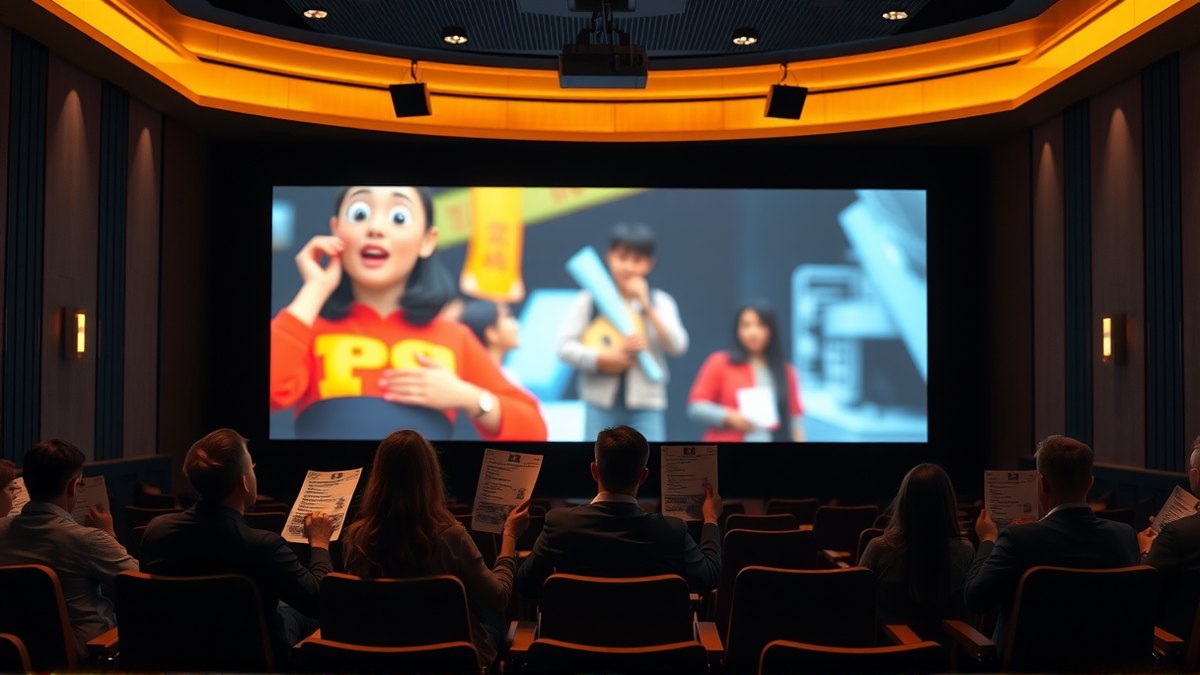
The Hong Kong International AI Film Festival (HKAIIFF 2026) opened submissions to filmmakers worldwide in May 2026. Organisers describe it as the world's first international event focused on "AI-native" content. Work on the project's logic and technical architecture began in 2022. In December 2024, the organisers' association was registered with the approval of the Hong Kong Special Administrative Region government. The city offers strategic context: it serves as both a centre for cultural exchange between China and the world and a hub for technological innovation.
A number as an artistic criterion
The most disputed part of the rules is the quantitative criterion. Submitted films must have more than 51 percent of their content generated by AI. Organisers treat this threshold as a way to distinguish between "AI assistance" and "natively AI creation." The festival aims to build a measurable reference point for judging films made with models. An ecosystem has grown around the competition. Alongside the event, a film academy (HKAIFA) will train the next generation of creators, a film market (HKAIFM) will handle trade in digital content rights, and a global submissions centre will accept entries online. Organisers also promise a cooperation channel with a Chinese export base for AI films. This is meant to shorten the time and lower the cost of preparing Chinese cultural content for foreign audiences, mainly by simplifying translation and production. Results are already measurable: in the April priority submission window, open for only one month, the centre received more than a thousand "AI-native" films from twenty countries and regions, including the United States, the United Kingdom, France, and Japan.
Nice, Lelouch and ethics
The European branch of this trend is the World AI Film Festival (WAIFF). Marco Landi, a former global business director at Apple, founded it. The first edition took place in Nice in April 2025. The event describes itself as the world's first international celebration of film made with AI. Claude Lelouch, an Oscar and Palme d'Or winner, chaired the jury for the first edition. The festival collected more than 1,500 entries from more than 80 countries, and the prize pool exceeded 20,000 euro. Alongside the competition, organisers run a "mock trial" devoted to the ethics of AI film, discussing the limits of using another person's face, voice, and style. Support came from French film companies Pathé and Banijay. Gong Li, an actress known for "Red Sorghum," "To Live," and "Curse of the Golden Flower," chairs the second edition in 2026. Choosing a Chinese star to lead a competition about technology shows that this trend is no longer a niche curiosity but a separate festival circuit with its own stars, sponsors, and assessment criteria.
Sources
2All figures and quotations in this text come from the sources listed below.
Content prepared by the editorial team with AI assistance.
Naomi Feldman
Comments
0- No comments yet — be the first.