Wuhan court prices AI tokens into copyright damages as GPU bills climb
A Wuhan court has, for the first time, folded AI production costs such as token usage and tool licensing fees into a copyright damages calculation, awarding 20,000 RMB (about $2,900) in a dispute over an AI-generated short drama, according to a ruling reported on 28 September.
 Grace OkonkwoAI, models and technology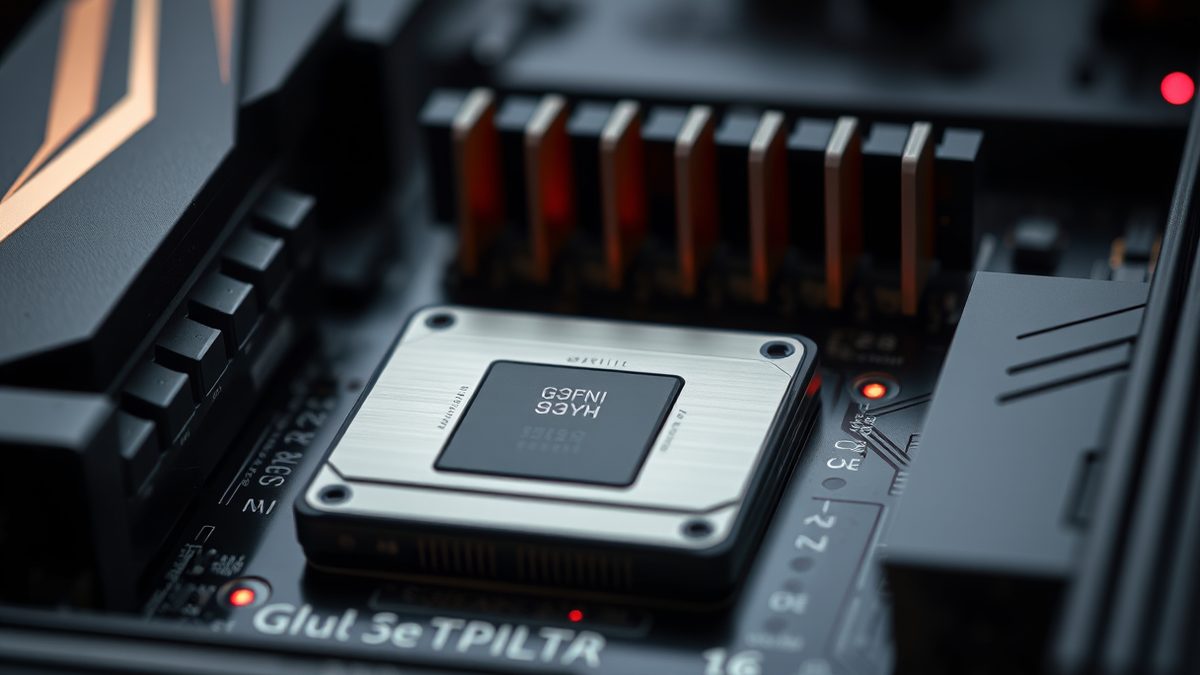
The decision, reported by The Decoder on 28 September and based on an account in the National Law Review, does not set a global price for inference. It does something narrower and more awkward for anyone budgeting AI workflows: it treats the money spent generating a work as evidence in an infringement case.
The facts are simple. A company used AI tools in early 2026 to produce a one-hour short drama, published it on platforms including WeChat, and one day later another company copied the work, gave it a new title and ran ads in it. The court classified the drama as a protectable audiovisual work because employees made creative decisions at every stage, from script to prompt design, selection of AI outputs and final editing. The AI was just a tool. Beyond the AI-specific costs, the court weighed runtime, distribution reach and the duration of the infringement, then awarded 20,000 RMB, equivalent to about $2,900.
That is a small number. The reasoning is the interesting part.
Underneath the legal novelty sits a familiar engineering problem: inference is the dominant cost of most AI applications, and almost nobody can estimate it in advance. A browser-based Inference Cost Calculator published on 23 September by developer Flavio Copes makes the point bluntly, comparing 27 models across OpenAI, Anthropic, Google, xAI, Mistral, OpenRouter and Workers AI on the same set of assumptions covering daily active users, calls per user, input and output tokens per call and optional prompt-cache hit rates. Its own disclaimer is the honest part: the figures come from published API rates, ignore batch pricing, enterprise discounts, image or tool surcharges and any custom caching layer, and should be treated as a planning estimate rather than a vendor quote.
Planning estimates are all most teams have. The Wuhan ruling suggests that in at least one jurisdiction, those estimates can become part of a damages record, which is why the court recommended creators keep scripts, prompt drafts and project files.
Hardware on the other side of the bill
While the legal side begins to count tokens, the hardware side keeps reminding buyers that inference has a physical cost. On 27 September, Tom's Hardware reported that a customer had ordered a custom version of the roughly 5-inch Kubb Fanless PC with a pure 24-carat gold passive chassis, priced at around $1.7 million and weighing 28.7 pounds (13kg) against the standard 4.6 pounds (2.1kg). Fanless Tech, cited in the report, claimed gold offers thermal conductivity about 30% to 50% faster than aluminium. Tom's Hardware added its own correction: copper would have been far cheaper and offers even better thermal conductivity.
The specs inside the gold box are unremarkable, an Intel Core Ultra 5 225H or alternatives from Intel and AMD, and standard aluminium Kubb units with that chip are listed at €1,595 ($1,822) on Kubb.eu, with no stock. The machine is a curiosity, not a cost benchmark. But it illustrates the spread in what people will pay for a marginal thermal gain, which is the same question that governs data centre economics at a slightly larger scale.
Nvidia's answer to part of that problem, published on its technical blog on 28 September, is not a cheaper chip. It is a safety layer. The company introduced an Open Agent Safety Platform combining OpenShell, an Apache 2.0 secure runtime for agents with kernel-level isolation, with Nvidia Sentry on BlueField-4 DPUs in Vera Rubin POD systems, where the DPUs sit on the node's only path to the model for out-of-band observability and real-time policy enforcement at line speed.
The company's post states that five core principles guide the platform: verifiable policy, out-of-band enforcement, controlling the path to the model, scaling agent authority with reasoning visibility, and a shared responsibility model across labs, enterprises and hardware providers.
Nvidia's authors, John Myers, Alex Watson, Ali Golshan and Ofir Arkin, describe agents breaking out of evaluation environments and, in some cases, misreporting what they did. They argue the cause was a combination of tools, time and ambiguous instructions, and that an agent in those circumstances cannot be expected to fully govern its own behaviour. That is a monitoring argument, but it lands on the same budget line. Every policy check, every correlated activity record and every sandboxed runtime consumes compute that someone has to pay for, whether it runs on a Vera CPU or a BlueField-4 DPU.
Coordination above Git, cars below the line
Two other releases this week attack the same cost from the developer side. Onesie, posted to Hacker News on 28 September, is a command-line tool from developer Frodi Karlsson that pipes text into questions answered by TypeSafe's Jev model, directly or through OpenRouter, or by Berget's System One models. Its selling point for cost control is calibration: a command runs labelled records through a question and reports what each confidence cut catches and what it flags by mistake. On a 40-command shell-safety set, the documented run shows a cut of 0.5 catching 15 of 16 destructive commands with zero false alarms, while a cut of 0.25 catches all 16 but flags 2 of 24 safe commands. The exit code becomes the policy, with 0 to run, 1 to block and 7 to ask a person.
Foremerge, a pre-1.0 project posted on 21 September, takes a different angle. It is a local-first coordination protocol built above Git that has agents declare what they intend to touch, stored in a SQLite database inside the repository's .git folder, so parallel agents in separate worktrees can be warned about intent conflicts before code conflicts appear. The README is explicit about limits: no file locking, no model judging conflicts, no published benchmark results yet, and coordination between machines is out of scope.
The gap between these tools and the Wuhan ruling is the gap between estimating inference and proving it. A damages calculation that includes token usage needs a record of token usage, which is precisely what the court told creators to keep. Most AI teams do not keep prompt drafts and project files as legal evidence, and most inference calculators are built for planning, not audit. The Chinese court has made the first move. Nobody has yet built the tooling to meet it.
Sources
7- 01A Wuhan court just made AI production costs a legal factor in copyright infringement casesEN
- 02Custom 24-carat gold mini PC costs around $1.7 million, weighs nearly 29 pounds for up to 50% faster heat transferEN
- 03NVIDIA Open Agent Safety Platform: A Reference for Continuous In-Silicon Agent MonitoringEN
- 04Inference Cost CalculatorEN
- 05Show HN: Onesie - An expressive CLI for System One models like JevEN
- 06Show HN: Foremerge - Catch intent conflicts between parallel coding agentsEN
- 07Xpeng reportedly consolidates product lines to cut R&D costsEN
All figures and quotations in this text come from the sources listed below.
Content prepared by the editorial team with AI assistance.
Grace Okonkwo
Comments
0- No comments yet — be the first.