India and Japan add chip capacity while a North Carolina quartz town stays a single point of failure
India has committed about $13.3 billion more to domestic chip manufacturing and $6.5 billion to smartphones, while a 2024 hurricane in North Carolina showed how much of the world's wafer supply still leans on one small town's quartz.
 Grace OkonkwoAI, models and technology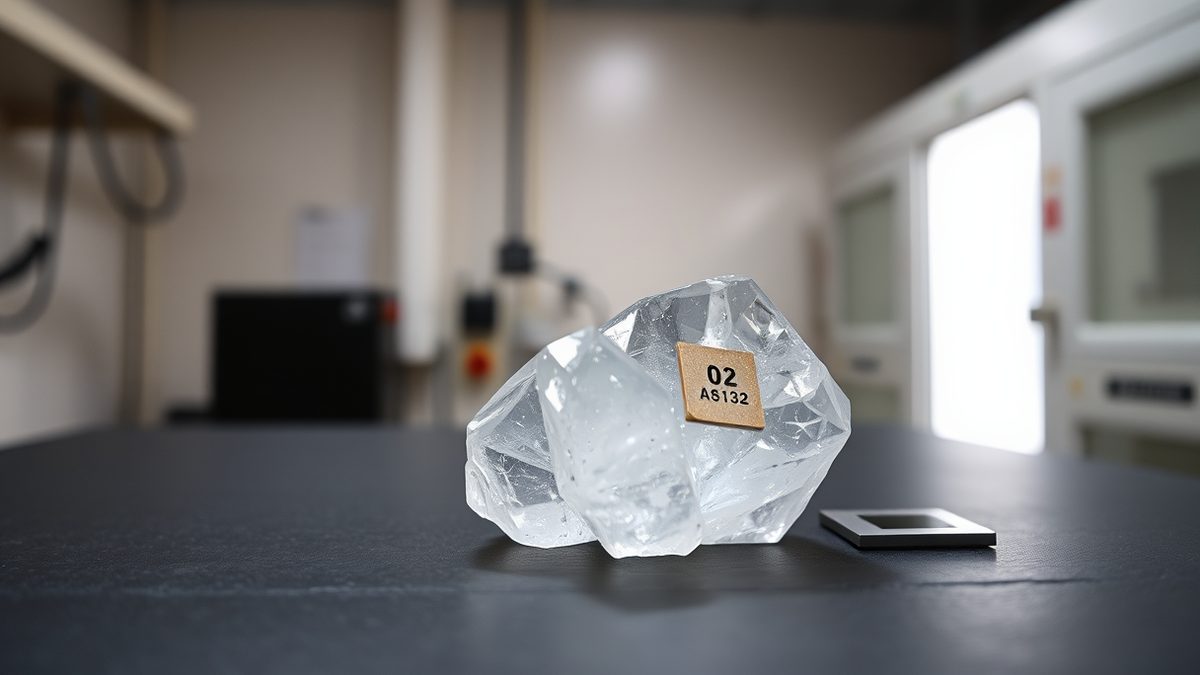
India's government announced a ₹625 billion (about $6.5 billion) Mobile Phone Manufacturing Scheme on Wednesday. It also allocated a further ₹1.28 trillion (around $13.3 billion) for domestic semiconductor manufacturing. The chip funding expands a $10 billion incentive program launched in 2021, according to TechCrunch. Both plans aim to move up the electronics value chain rather than simply assemble other companies' designs.
The smartphone scheme runs for five years, through March 2031. It pays 2.25% to 5% of eligible sales, plus an extra 1.5% for sourcing key components and sub-assemblies locally. A 3% top-up applies to product design and research aimed at building Indian brands. New Delhi expects ₹39 trillion (around $405 billion) in mobile-phone production over the period and about 60,000 direct jobs.
The numbers behind the pitch
The gap is significant. China accounted for 63% of global smartphone production in 2025, compared with India's 18%, according to Counterpoint Research. Apple began assembling iPhones in India in 2017. About 25% of its iPhones are now made there, TechCrunch reported, with Foxconn and Tata Group among the suppliers. India also cleared a smartphone joint venture between China's Vivo and Dixon Technologies and scrapped import duties on some phone and electronics components.
"The semiconductor space is now in the upcycle — and Malaysia will be a beneficiary of that," Amir Hamzah Azizan, Malaysia's second finance minister, told CNBC at the IMF spring meetings in Washington.
Malaysia is taking a different route into the same supply chain. It holds 13% of the global market for chip packaging, assembly and testing services, according to a February report from the Malaysian Investment Development Authority cited by CNBC. The country is shifting away from back-end production to move up the value chain. Amir Hamzah said Malaysia would not go "head on to the tail end of the high-end competition" and described the opportunity as one of economies of scale.
Capacity is also expanding at the materials and equipment level. Texas Instruments said on 24 October 2024 that it had started producing gallium nitride power semiconductors at its factory in Aizu, Japan. Combined with its existing GaN manufacturing in Dallas, Texas, the company said it would internally manufacture four times more GaN-based power semiconductors as Aizu ramps up.
TI's senior vice president of Technology and Manufacturing, Mohammad Yunus, said the company had qualified 200mm GaN technology for mass production. It aims to grow internal manufacturing to more than 95% by 2030. The company also said it had piloted GaN manufacturing processes on 300mm wafers earlier in 2024, and that its expanded processes are fully transferable to that size.
The bottleneck nobody replaced
None of that fixes a much older dependency. Spruce Pine, North Carolina, is home to the only mines producing ultra-pure quartz at commercial scale, according to Tom's Hardware. Two companies operate there: Sibelco North America and The Quartz Corp. When Hurricane Helene hit in late September 2024, it brought over two feet of rain, cut off roads and left residents without power. Sibelco confirmed a suspension of operations. The Quartz Corp told The Verge it was too early to determine whether its high-purity quartz production facility had been affected, Tom's Hardware reported.
The quartz is used to make crucibles that hold molten silicon during the Czochralski process. In this process, polysilicon is melted above 1,400 degrees Celsius and a seed crystal is drawn out to form a single-crystal ingot. Impurities from the crucible migrate into the melt, so the quartz must be as pure as possible. Brian Potter, writing on Construction Physics in November 2024, noted that Spruce Pine is estimated to produce 180,000 to 200,000 tons of high-purity quartz a year. High-purity quartz costs on the order of $10,000 a ton. Crucibles have short lifespans, around 400 hours of operation. One paper estimated that 30% of the manufacturing cost of monocrystalline silicon ingots came from the crucibles.
Potter's conclusion is more measured than the viral version of the story. Cutting off Spruce Pine would probably not choke off semiconductor supply completely, he wrote, but it would mean yields going down and costs going up. Alternatives exist but are not yet developed, not quite as good, or not as cheap. The industry is aware of the bottleneck, and new quartz sources and crucible materials are being investigated.
The historical counterpoint is IBM's Project SWIFT. IEEE Spectrum reported in December 2024 that Bill Harding, manager of IBM's Manufacturing Research group in East Fishkill, New York, set out in 1970 to build a fully automated wafer-fabrication line that could produce integrated circuits in less than one day. SWIFT averaged 5 hours to complete each layer of its process. The fastest modern fabs take 19 hours per processing layer, and the industry average is 36 hours, according to IEEE Spectrum. Those figures do not account for today's more numerous layers and larger wafers, but the gap is real.
Capacity announcements are easy to count. The harder numbers decide whether new fabs run at cost: hours per layer, yield per wafer, and whether the quartz crucible at the bottom of the process arrives on time.
Sources
6- 01IBM invented semiconductor manufacturing automationEN
- 02Malaysia pushes into higher-end semiconductor manufacturingEN
- 03Hurricane devastates quartz mines critical for semiconductor manufacturingEN
- 04India to allocate $20B to semiconductor and smartphone manufacturingEN
- 05TI expands internal manufacturing for gallium nitride (GaN) semiconductorsEN
- 06Does All Semiconductor Manufacturing Depend on Spruce Pine Quartz?EN
All figures and quotations in this text come from the sources listed below.
Content prepared by the editorial team with AI assistance.
Grace Okonkwo
Comments
0- No comments yet — be the first.