Chinese compute suppliers say software is what counts
"One and a half 6000D cards beat one B300," a Chinese cloud compute supplier sums up its inference optimisation. Inspur points to a compute gap worth 381 billion dollars by 2030.
 Dr. Amara PatelEconomy, business and world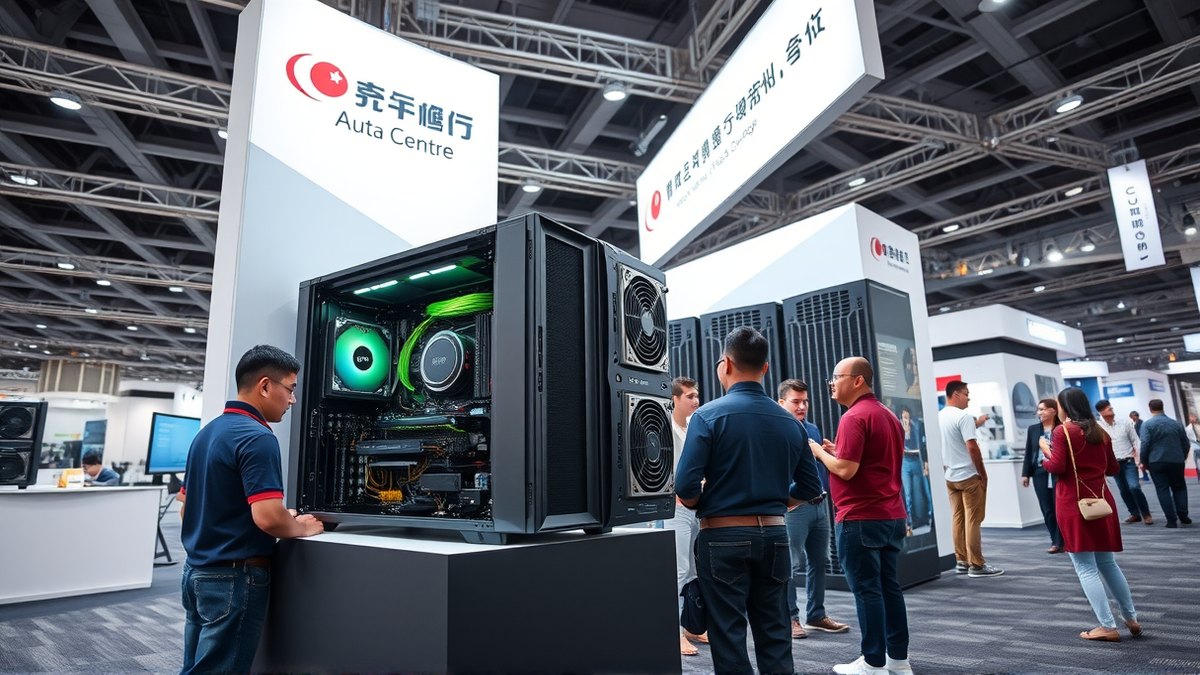
AI cost discussions usually start with graphics card prices. Chinese infrastructure supplier 是石科技 (METASTONE) argues the bigger savings lie in software. The company tuned the DeepSeek-V4.1-Flash model to run on eight cards connected only via PCIe, without a fast interprocessor bus.
量子位 reported the result: input throughput rose from 1,932 to 13,274 tokens per second, a 6.87x increase. The team completed the compute kernel, rebuilt inter-card communication, and reused the context cache. The company sums it up: "one and a half 6000D cards beat one B300." Cheaper, slower hardware wins if the processing is arranged well. The firm manages over 20,000 P of compute across several data centres and claims service availability above 99.95 percent.
Inspur (浪潮信息) offered a second perspective at the AICC 2026 conference, citing IDC data. Global demand for AI compute will be met at 79 percent in 2024, 71 percent in 2027, and around 77 percent in 2030. The gap between needs and supply will reach 380.9 billion dollars, ten times the 2024 level. Token consumption is expected to grow more than 48-fold year on year on a cumulative basis, with inference tasks reaching 4,000 trillion per year by 2030.
Inspur answers with hardware. The SD200 Ultra system holds 128 chips, 8 TB of memory, and 64 TB of storage in a single machine. This allows serving trillion-parameter models without splitting them across multiple racks. All-to-all communication latency has been cut to 0.69 microseconds.
For compute buyers, the price per token is no longer a function of hardware prices alone. It increasingly depends on how efficiently a supplier uses existing resources, changing the rules for cloud service tenders.
The practical takeaway for buyers is clear. A several-fold throughput gain came from rewriting cache handling and distributing work across available chips. Therefore, a decision to buy new-generation hardware should be preceded by a software audit. A supplier that can show measured values on the same infrastructure is selling savings, not just compute. This is also the simplest way Chinese data centre operators respond to export restrictions: where the most powerful cards are unavailable, the efficiency of existing server room equipment becomes the deciding factor.
Sources
2All figures and quotations in this text come from the sources listed below.
Content prepared by the editorial team with AI assistance.
Dr. Amara Patel
Comments
0- No comments yet — be the first.