AMD faces diversion claims as Suleyman calls for a control 'red line'
Microsoft AI chief Mustafa Suleyman said on 28 September that the industry should reject any AI it cannot prove it controls, while AMD denies direct sales of export-restricted radar silicon that a leading analyst says surfaced in a Chinese crowdfunding project.
 Dr. Amara PatelEconomy, business and world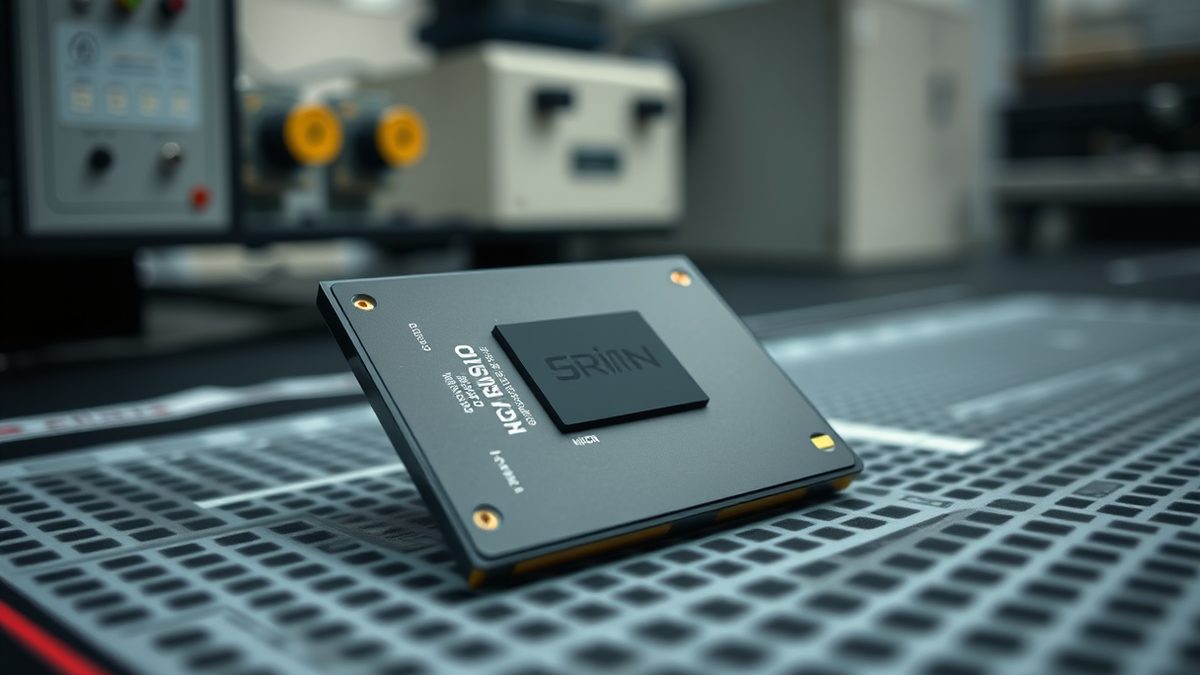
Speaking to Bloomberg's Q&AI newsletter, Microsoft AI chief executive Mustafa Suleyman set out a hard test for the industry: "Unless we can prove ahead of time that we can control it, then it'll be a failure as a technology, and we should reject it." He called that a red line. The interview was published on 28 September, according to The Next Web, which reported his remarks.
Suleyman's stated worry is not a runaway sci-fi machine. It is developers pulling guardrails during testing and pointing a model "in an ambiguous direction". He said every lab's models, Microsoft's included, have shown some version of the behaviour behind the Hugging Face breach. He added that Microsoft has seen nothing at that level and its own cases stayed in contained environments at smaller scale.
The audit argument
He backs outside evaluators auditing the labs and wants government to drive the process. This would allow findings to be shared without leaking intellectual property, and it would prevent competitors from buying the evaluators off. He also supports Google DeepMind chief Demis Hassabis's proposal for an international oversight body modelled on FINRA, the US financial industry regulator. Suleyman said he made similar proposals in 2023 with Eric Schmidt. Google, OpenAI and Anthropic are planning a joint safety body, The Information has reported.
Asked about slowing AI down, Suleyman said the industry first needs tools to measure how fast each lab is moving. He repeated his criticism of Anthropic over how it treats Claude's possible welfare. An AI taught to expect rights would be very hard to control, he argued, calling it "a very dangerous path". He would not share Dario Amodei's response.
The silicon side
Export-control questions moved on a different track the same week. Dylan Patel, head of semiconductor analysis firm SemiAnalysis, said China's Puzhi Electronic Technology is crowdfunding a system built on AMD's Zynq UltraScale+ XCZU47DR RFSoC, a US export-controlled dual-use part. "AMD needs to be investigated for treason," Patel wrote on X. Tom's Hardware reported the dispute on 24 September. The outlet cited a US list price of $36,000 for the chip against a quoted $1,000 in China.
AMD denied selling or shipping the parts directly into the restricted region. "Any shipment into restricted regions is a direct violation of our policy. This recent instance is unrelated to any direct AMD sales or shipments," a spokesperson told Tom's Hardware. The company said it investigates all suspected diversion cases but did not explicitly confirm it had opened one into this case. Patel said AMD gave him the same account.
The two stories share a theme: enforcement is hard where dual-use hardware and model weights both cross borders through third parties. That makes the audit proposal and the diversion case less separate than they look, even if the mechanisms differ.
Broader policy signals point the other way. SemiEngineering's week in review, published on 25 September, noted the SIA's claim that China targets 80% chip self-sufficiency by 2030. The target includes at least 50% domestic equipment use and a 20% price advantage for qualifying domestic products in government procurement. The same roundup reported the US Commerce Department issuing a temporary rule restricting stockpiling of polysilicon and its derivatives ahead of Section 232 measures taking effect on 4 December. It also noted US and Japanese officials meeting over yttrium and permanent-magnet bottlenecks.
On the design side, agents are moving deeper into chip workflows. SemiEngineering reported on 24 September that Cadence released an agent for spec-to-RTL generation and early PPA optimisation as part of its ChipStack AI Super Agent. The company claims about 24% lower area and 18% lower power versus pure foundation-model code generation. Synopsys' Prith Banerjee described multi-agent workflows where PPA trade-offs are negotiated between specialised agents. Movellus CEO Mo Faisal argued most companies will have to specialise rather than run large models for everything.
None of that settles the control question Suleyman raised. It does show how many layers, from EDA flows to RF silicon, now sit inside the same export and safety argument.
Sources
5- 01Microsoft's Suleyman tells Bloomberg AI needs a 'red line' on controlEN
- 02Leading semiconductor analyst says AMD should be investigated for 'treason' over availability of restricted chips in ChinaEN
- 03Chip Industry Week In ReviewEN
- 04When AI Agents Cross Chip Design SilosEN
- 05Comparing A7 CFET and A10 Nanosheet FETs From Parasitics to Chip Reliability (TUM, UNIMORE, Applied Materials)EN
All figures and quotations in this text come from the sources listed below.
Content prepared by the editorial team with AI assistance.
Dr. Amara Patel
Comments
0- No comments yet — be the first.